



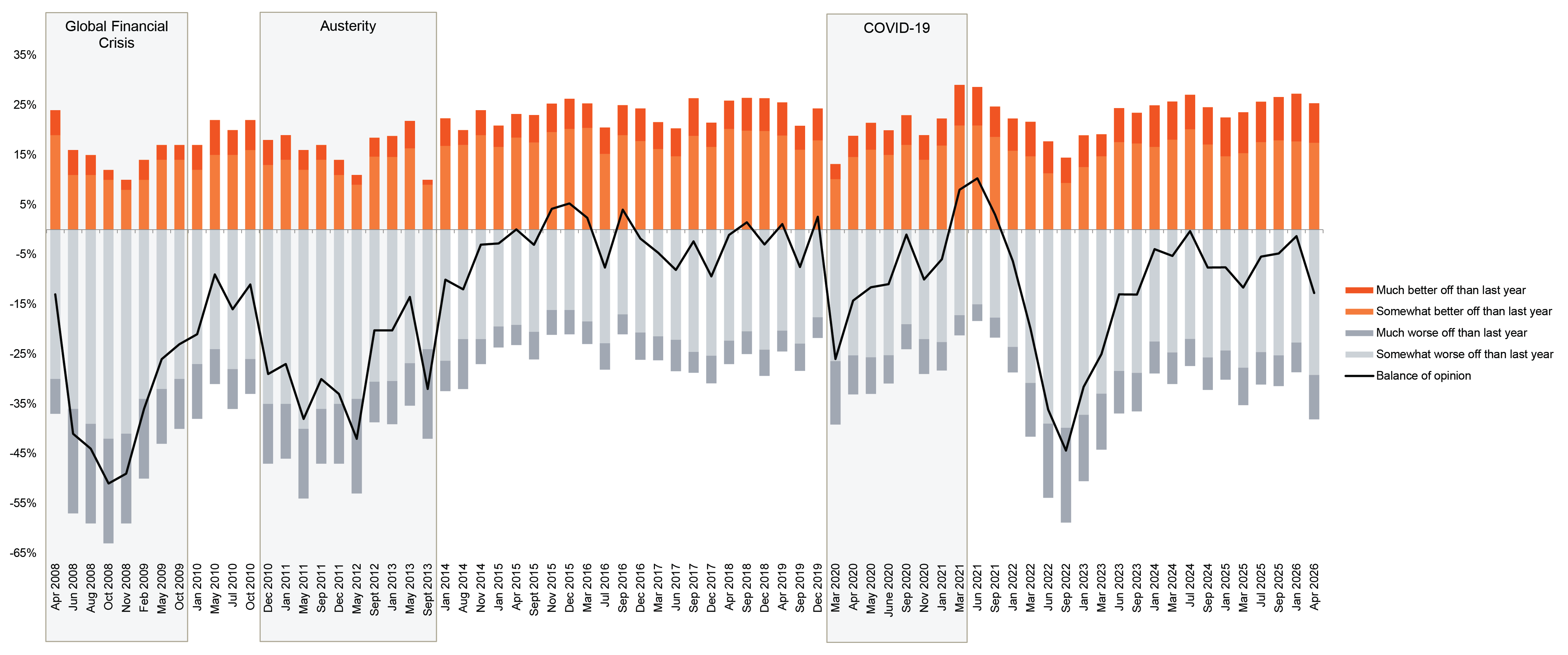
Sentiment score falls to –13 from –1 in January 2026
Biggest quarterly fall in consumer sentiment since June 2022
9 out of 10 consumers concerned about the cost-of-living
Biggest quarterly deterioration in the perception of household finances in four years
8 out of 10 consumers plan to cut their short-term spending
PwC’s latest Consumer Sentiment Survey indicates global events have dented consumer confidence, with sentiment declining to its lowest level since Autumn 2023 and fall at the fastest quarterly rate since June 2022.
The survey, a barometer of consumer’s spending intentions, recorded an index score of –13 in April, falling from a score of –1 at the start of this year and reversing the improving trend seen since the start of last year. Now the score sits in line with the long-run average since PwC began tracking sentiment in 2008. Although sentiment is trending downwards across all age groups, young people are still more optimistic than older people and the gap remains wide. The findings come as the full supply-chain impacts of the Middle East conflict, for example on energy prices and food, are yet to be felt by consumers.
With consumers bracing themselves for rising living costs, the survey reveals the biggest quarterly drop in perceived household finances since 2022- a 7% decline in those reporting healthy finances (i.e. having money left at the end of the month for luxuries or savings) since January, and a 4% rise in those struggling or in trouble (i.e. missing bills or loan repayments, or in danger of doing so). Under 35s have been hardest hit, with a 20% fall in those feeling financially healthy and a 9% increase in those struggling or in trouble.
Almost 90% of consumers say they are concerned about the cost of living, the top concern for consumers, particularly middle age groups (35-54 year olds) and the less affluent. The other joint top concern is the UK economy (almost 90%), followed by global events (87%), with other big rises this quarter for concern about household earnings (up to 63% from 58%) and mortgage repayments or rent going up (up to 44% from 36%).
Consumers planning short-term cut backs
Concerns over the cost of living has led more consumers to curb spending in the short-term. Almost eight out of ten consumers plan to make spending cutbacks in the next three months. When asked what they expect to cut back on the most, two-fifths (40%) said they will simply buy less, with a similar number saying they will eat out less or trade down to cheaper brands (37%). Not surprisingly given the higher price of petrol and diesel, the category that’s seen the biggest rise since January is the number of people who say they will drive less, which has doubled from 12% to 24%.
Sam Waller, Leader of Industry for Consumer Markets at PwC UK, said:
“Rising costs are prompting shoppers to pull back spend across the board, and it’s expected sentiment will get worse before it gets better, as consumers face higher energy and food costs later in the year. For businesses, this environment demands agility and resilience. With customers increasingly cost-conscious, responding to their changing needs, optimising supply chains, strengthening logistics, and building flexibility into operations to manage demand volatility and rising input costs will be key to navigating the uncertain months ahead.”
Future spending intentions
When consumers were asked what their spending priorities are for the next 12 months, grocery shopping remains the top category, driven by expected inflation, with pet food and pet care being the only other area where more consumers plan to increase rather than decrease spending. More consumers say they plan to spend less than spend more on every other category, with the biggest net difference in spending intention earmarked for eating out (-32%) which is also 9% worse than it stood in January (-23%). However, net spending intention has declined across every category since the start of 2026, now falling to levels we last saw two years ago.
While more consumers in all age groups intend to spend less rather than spend more on every category except on food and pets, young people, those ages 18 to 34, are less willing to cut back on clothing and health and wellbeing, with positive net spending intention on those categories.
Jacqueline Windsor, Head of Retail at PwC UK, said:
“The fall in consumer sentiment this quarter will give retailers pause for thought. While the first quarter and first half of the year tend to be the low season for many, the prospect of a Golden Quarter with higher inflation will feel like the eye of the storm. Retailers will need to continue to position on value - ensuring they have a range of products for those who plan to trade down as well as cater for those who are going to protect their spending in areas like fashion, health and beauty.”
Rick Jones, Hospitality and Leisure sector lead at PwC UK, said:
“This change in sentiment clearly suggests discretionary spending is set to be reined in by consumers in the short-term. While most of the downward swing in spending intentions is directed at retail moments, eating out and hospitality, travel and leisure companies also need to act now.
“For high street hospitality operators, this will mean continuing to focus on providing great experiences and communicating value for money offerings to drive footfall. Also, pubs, bars and other leisure and hospitality businesses will be hoping the World Cup this summer can provide a timely boost to trade. For holiday operators, offering consumers flexible terms and alternative options could help remove barriers to early bookings.”
Zelf Hussain, Restructuring and Insolvency partner at PwC UK, said:
“With retail and consumer business more exposed to the current market conditions, now will be the time for owners to look at whether transactions, either merger or divesting, or restructuring will put their organisations on surer financial footing. Company insolvencies the first quarter of this year have already seen an increase month to month and with consumers cutting back combined with the rising cost of fuel and inventory, we may see this trend continue upwards unless businesses take action.”
 -Ends-
Notes to Editors:
The research is based on a nationally representative survey of 2,068 adults conducted between 10-13 April 2026.
About PwC
At PwC, we help clients build trust and reinvent so they can turn complexity into competitive advantage. We’re a tech-forward, people-empowered network with more than 364,000 people in 136 countries and 137 territories. Across audit and assurance, tax and legal, deals and consulting, we help clients build, accelerate, and sustain momentum. Find out more at pwc.com.
© 2026 PwC. All rights reserved.


