




Capital Event Readiness depends on more than a strong narrative. Businesses need to be both Value-Ready and Process-Ready: clear on where value is created, at risk and still untapped, while also ensuring the evidence, operations and materials can withstand investor scrutiny.
One point is increasingly clear: businesses that start early, define the value case and build the evidence required to substantiate it are better placed to maximise value and execute a successful capital event.
In brief
- Start with value. A clear Equity Story + Value Bridge should show where value is created, at risk and still untapped - and what investors need to believe.
- Become process-ready before diligence begins. Early preparation can maximise value, reduce execution risk and ensure diligence validates rather than challenges the equity story.
- Make value creation executable. Translate the value thesis into a quantified, sequenced and measurable plan, linking operational drivers to financial outcomes.
- Prepare the whole business for scrutiny. Reconciled information, operational readiness and clear governance allow management to respond quickly and credibly.
- Build the evidence early. Data, KPIs and analysis should substantiate the equity story and give investors a consistent, decision-useful view of performance.
- Protect value as well as create it. Technology, data, people, sustainability, cyber and other operational risks need to be addressed before they erode investor confidence or value.
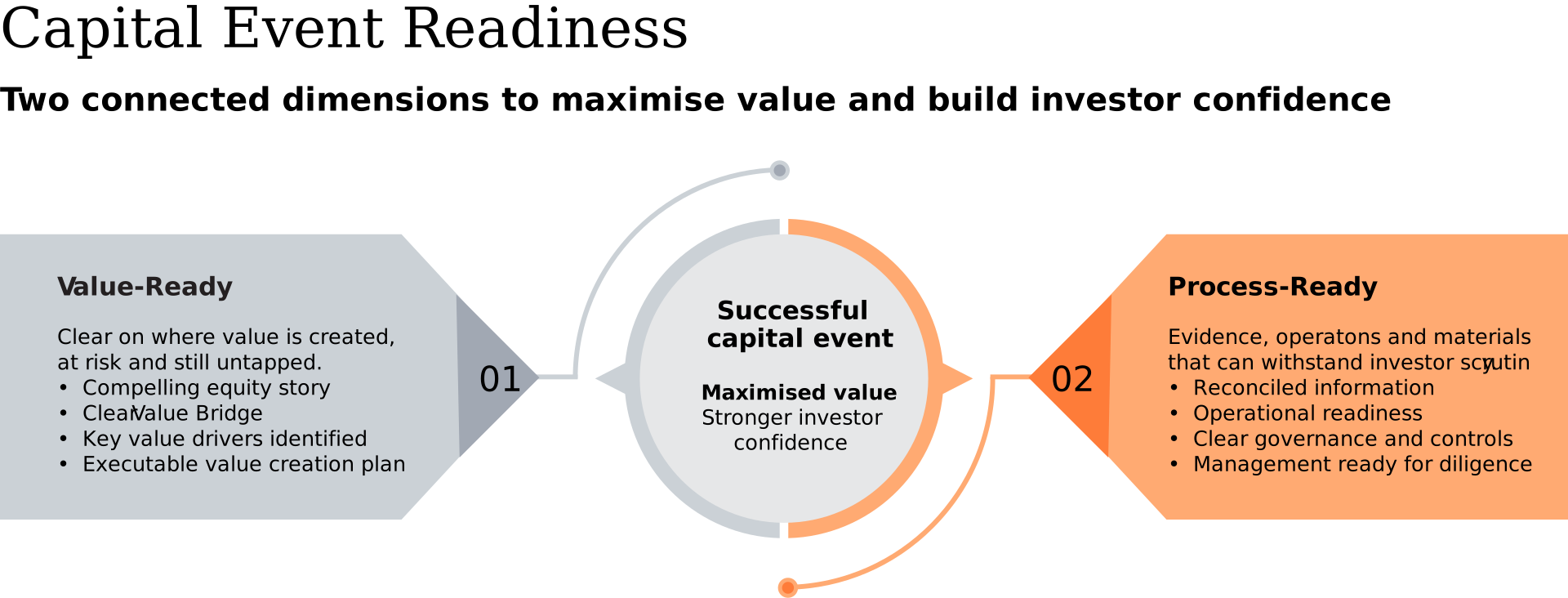
Figure 1. Capital Event Readiness: two connected dimensions
Start with value, then build the evidence
Capital Event Readiness begins with understanding what investors need to believe - and then building the evidence required to prove it.
Our experience diligencing businesses gives us an investor-side view of what good looks like and where preparation can fall short. We use that perspective to reverse-engineer what investors will need to see and hard-wire it into preparation from the outset.
A successful capital event starts with a clear, evidence-based view of where value is created, at risk and still untapped. The equity story explains why the business is attractive; the supporting evidence gives investors confidence that the story is credible and deliverable.
Buyer scrutiny has become more detailed. Buyers and advisers want to understand where growth comes from, how resilient it is and whether reported performance reflects the underlying economics of the business. That means businesses preparing for a capital event need more than basic reporting. They need a clear version of the truth, deeper insight into performance and enough structure around the data to answer questions quickly and consistently.
One of the clearest points from the discussion was that businesses should not let the available data drive the story. The better approach is to define the Equity Story and Value Bridge first and then identify the evidence required to substantiate it.
That starts with a clear view of the key value drivers. Buyers may want to understand whether growth is organic or acquisition-led, whether margin expansion comes from pricing, mix or cost efficiency, and whether customer behaviour points to durable future performance. The role of data is to provide evidence that helps answer those questions. These value drivers should then feed into the Executable Value Creation Plan, with benefits, costs, timing, phasing, prioritisation and ownership made explicit.
1
Equity story
BELIEVE
2
Value Bridge
VALUE
3
Evidence
PROVE
4
Deal model
CONNECT
5
Executable plan
DELIVER
Figure 2. From equality story to executable value
The AI & Data Engine Room creates one aligned evidence base end-to-end, connecting the Equity Story, Value Bridge, deal model and KPIs to the underlying operational data, so that the value story can be consistently evidenced through diligence and investor scrutiny.
Within Capital Event Readiness, a data cube can be one of the practical tools that brings that evidence together. It brings financial, operational, customer and product data into one analytics environment so management, buyers and advisers can explore performance in more detail. Done well, it can help prove the investment thesis, test the consistency of the equity story and reduce reliance on repeated manual responses during diligence.
The point is not to create analysis for its own sake. It is to focus on the evidence that matters most to value and makes the equity story easier to test.
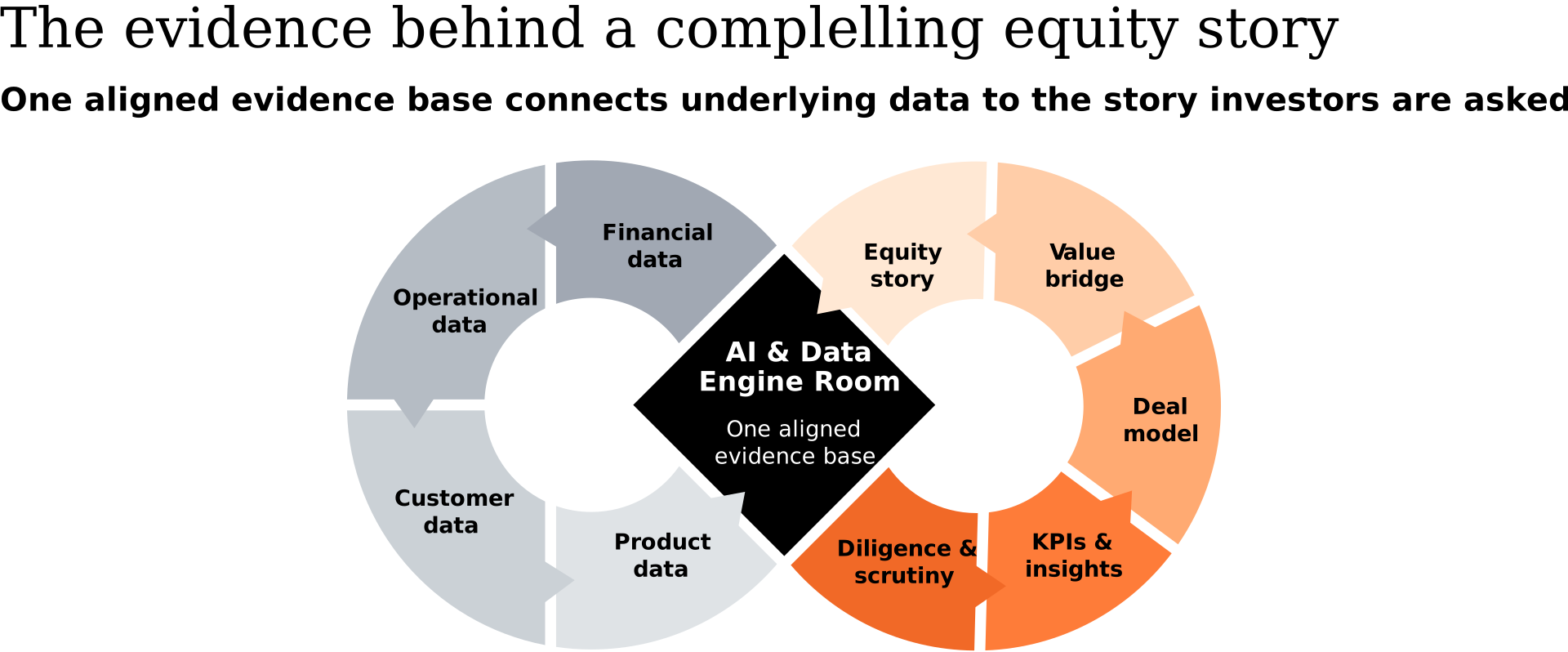
Figure 3. Aligned evidence base
Early preparation creates value and transaction certainty
One deal model, one narrative
A strong deal model should bring the story to life in a way buyers can trust. It should allow investors to assess the credibility of the growth narrative using data that is clear and consistent. In practice, that means connecting operational drivers to financial outcomes. A credible deal model should also connect the Equity Story, Value Bridge and Executable Value Creation Plan into one financial narrative.
If the investment case is built around customer retention, market penetration or pricing discipline, buyers should be able to trace those drivers through to revenue growth, margin performance and cash generation.
A well-constructed model also helps create one financial narrative across the transaction. This matters because value at exit is rarely judged on EBITDA alone. Buyers will also look closely at cash flow, working capital, debt and other KPIs that shape their view of earnings quality and sustainability.
Consistency is critical. Information relating to the valuation multiple, balance sheet and net working capital target needs to be aligned and defensible. Forward-looking statements should make sense in the context of historical performance. Where valuation moves from reported EBITDA towards run-rate EBITDA, sellers should also consider the implications for working capital and net debt.
Early preparation can help:
- Maximise full-potential value.
- Build investor confidence and reduce transaction execution risk.
- Improve the efficiency of the process and the use of time and resources.
More runway
Time to test assumptions
Fewer surprises
Gaps surfaced before scrutiny
Greater confidence
Astory the evidence supports
More certainty
Stronger position at the event
Figure 4. How starting early changes the process
Preparing well ahead of a capital event gives management teams time to shape the equity story, test whether the operational reality supports it, anticipate likely due diligence questions and address issues before they become obstacles.
This matters because a transaction can expose weaknesses quickly. If reporting is inconsistent, if more granular data does not reconcile to management accounts, or if key value claims cannot be evidenced, confidence can erode. That can create delays, increase friction and put pressure on price. The objective is for diligence to validate the equity story, rather than expose gaps that challenge it.
Operational readiness is built below the surface
Process readiness depends on underlying business capabilities that often sit below the surface but can have a direct effect on investor confidence and transaction execution. Data is one important part of that readiness. Four data foundations stood out:
- Accessible and timely data.
- Strong governance.
- A reliable platform that creates a single source of truth.
- Connectivity across systems, platforms and analytics.
These foundations matter because buyers will often test how data is produced, not just what it says. They may ask where master data sits, which source should be treated as the authoritative record, and how management decides which figures to rely on.
One practical point from the discussion was that data should not be treated purely as an IT issue. Businesses that do this well treat it as a strategic priority, put ownership in the hands of the business and build controls into the way data and reporting evolve over time. The same principle applies across the wider readiness agenda: ownership needs to sit with the business, supported by the right functional specialists and a single integrated masterplan.
Protecting value through operational readiness
Capital Event Readiness is not only about demonstrating upside. It is also about identifying and addressing risks that could erode value or undermine investor confidence.
Sustainability is no longer a side issue. Buyers are increasingly assessing it through three related lenses:
- Legal and regulatory requirements.
- Investor expectations.
- Value creation and resilience.
Buyers want to understand what sustainability means for the business and whether management can explain that clearly. In some businesses, this may be linked to growth. In others, it may be more about cost, resilience or future risk. Either way, businesses need the right data and a grounded narrative.
Technology is another area where buyers increasingly expect substance. Ahead of a capital event, they want confidence that the systems already in place can support the business today and continue to support growth. A clear technology plan can help show what is in place, what needs to improve and how technology supports the wider strategy.
AI now sits within that same conversation. Investment committees increasingly want to know how management is approaching it, where it is already being used and what the plan is for future adoption. Leaders do not need every answer, but they do need to explain their thinking clearly and show how AI fits into the broader strategy.
Cyber security can also have a significant effect on value and buyer confidence. Buyers will usually focus on three practical questions:
- Could sensitive data be exposed?
- Could the business be disrupted?
- Can management demonstrate effective control?
They will take more comfort from evidence such as a clear inventory of critical data, mapped access controls, regular review and testing, and tools such as multi-factor authentication than from broad assurances. They will not expect perfection, but they will expect a credible plan for remediation and control.
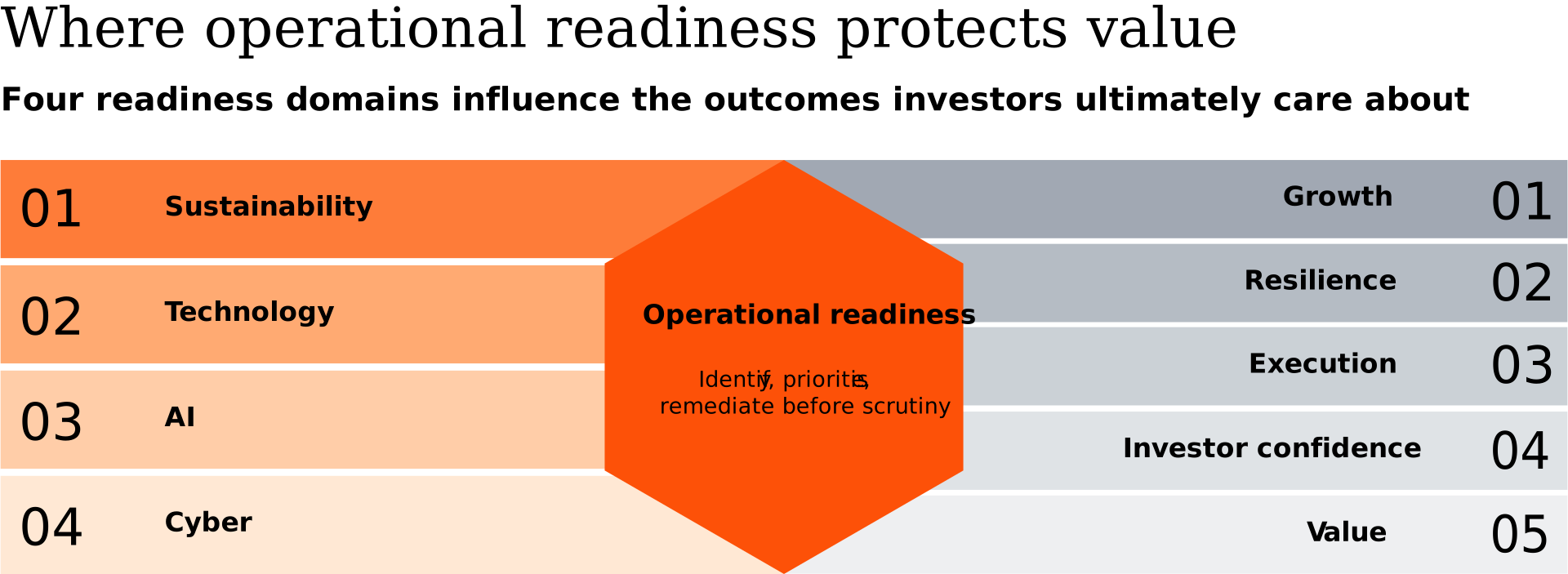
Figure 5. Where operational readiness protects value
A broader view of Capital Event Readiness
Taken together, these themes point to a broader view of Capital Event Readiness. Preparing for a capital event is not simply about producing transaction materials or getting through diligence. It is about ensuring the business is both Value-Ready and Process-Ready.
Being Value-Ready means having a clear, evidence-based view of where value is created, at risk and still untapped, supported by an executable plan for delivering it. Being Process-Ready means ensuring the growth story, KPIs, data, operations, diligence materials and management team can withstand investor scrutiny.
The two need to be addressed together. By starting early, businesses can reverse-engineer what investors will need to see, address gaps before they become transaction issues and build the evidence required to support the value story. The result is a business optimised for value and ready for the process - where diligence validates the equity story rather than challenges it.
Contact us