



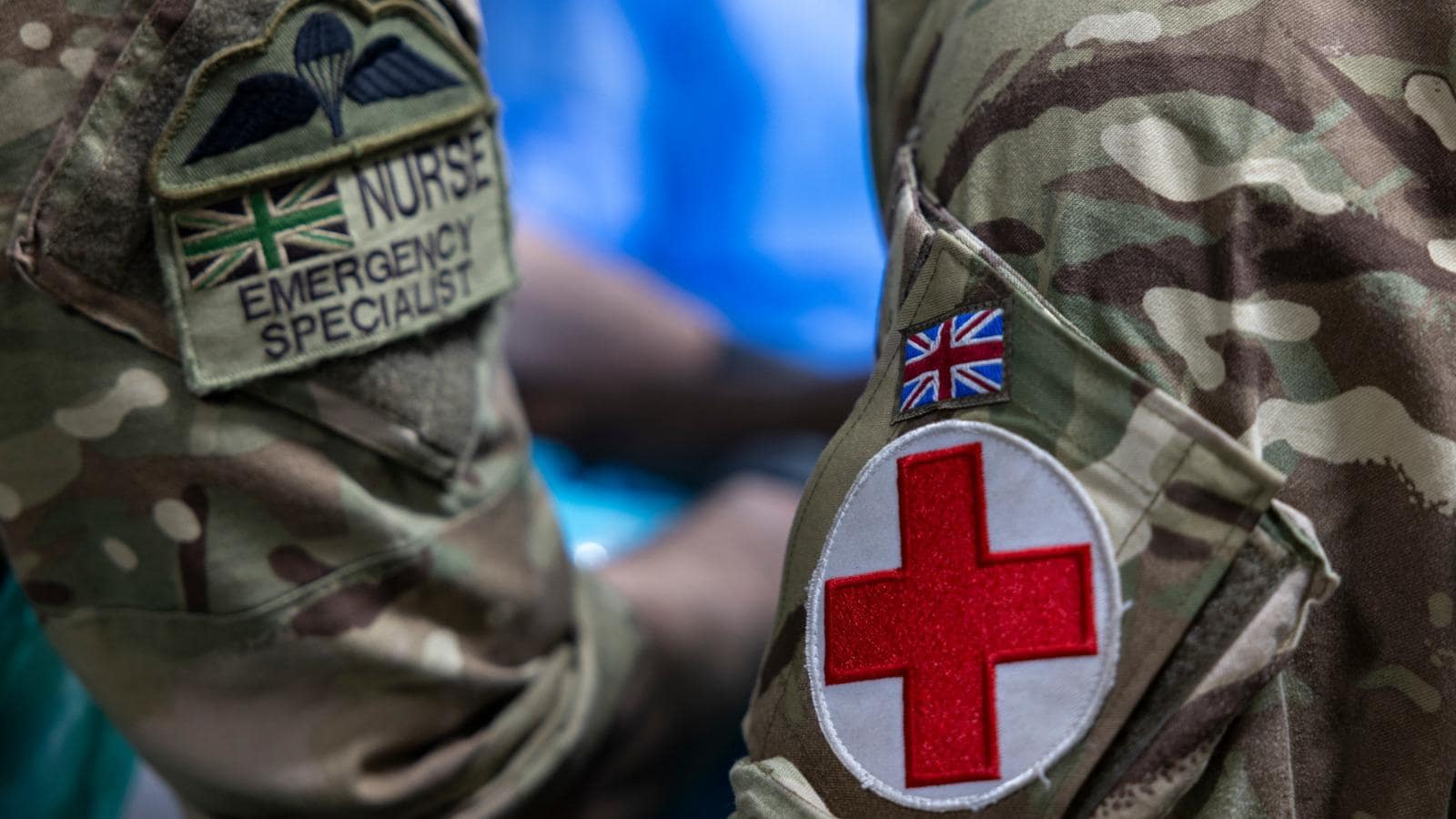
That challenge is growing as threats become more immediate, more diffuse, less predictable and more connected to everyday life. Cyber-attacks, infrastructure disruption, economic coercion and pressure on critical supply chains may take different forms, but they all test whether national power can hold under real-world strain.
Resilience is not new. But in this environment, it must be treated as part of deterrence: a shared capability the UK can build, not a defensive fallback.
Resilience as part of deterrence
National resilience is no longer a secondary policy question. It shapes an adversary’s judgement about whether disruption will work. If hostile actors believe they can interrupt essential services, strain supply chains, erode democracy and public confidence or slow mobilisation below the threshold of war, vulnerability becomes strategic opportunity.
Military strength and readiness remain essential. But deterrence also depends on national endurance: the ability to absorb shocks, sustain operations and recover quickly. NATO Article 3 reflects that logic by requiring allies to maintain and develop their individual and collective capacity to resist armed attack. Article 5 may be better known, but Article 3 helps make collective defence credible.
The implication for the UK is clear. Resilience is not a distant aspiration but an operational capability that must be built faster than the threat is evolving.
From strategy to system for delivery
The UK has made real progress in recognising resilience as a national priority. The next challenge is delivery: building a system that assigns ownership, aligns incentives and turns ambition into dependable practice.
The barrier is not inactivity, but fragmentation. Responsibility is spread across departments, sectors and operating levels, with too much depending on coordination by goodwill rather than execution by design.
The result is unclear ownership of key outcomes. Where accountability is diffused across critical infrastructure protection, civil defence, domestic security and crisis coordination, resilience risks becoming everybody’s priority and nobody’s responsibility.
The preparedness gap
The consequence is a widening gap between the threat environment and the nation’s practical preparedness. The question is not whether threats and vulnerabilities are understood, but whether the system can respond at the pace, scale and duration a serious crisis would demand.
That gap is visible in fragile supply chains, constrained industrial capacity and ability to surge, limited civil and military stockpiles, and the difficulty of sustaining operations over time. Mobilisation, adaptation and continuity all depend on capacities built before they are tested.
From awareness to participation
A whole-of-society model will not work unless resilience is translated into practical roles for citizens, communities, employers and institutions. Public understanding remains uneven, but the problem is not a lack of support. PwC’s Forces for Change research found significant backing for a stronger military and industrial base and identified a willingness to be involved in defence. The challenge is to turn that support into practical contribution by linking national security to everyday continuity.
That means making resilience participatory rather than rhetorical. Citizens need to know what preparedness looks like in daily life. Employers need to understand their role in continuity planning, protecting critical operations and releasing specialist skills in crises. Education can help build civic understanding, skills and shared responsibility. Each has a different role, but all need to be part of the same national effort.
Practical contribution depends on a specific, proportionate ask. Urgency matters, but fear alone will not assure resilience. Leaders need to build shared understanding of the threat, show why resilience strengthens defence and deterrence and make clear how society can contribute before disruption occurs.
A stronger model should also broaden the idea of service. Not everyone will contribute through traditional military pathways, and not every resilience role is a combat role. More flexible routes are needed to connect willing citizens to civil defence, logistics, infrastructure support and specialist crisis functions.
Industry needs clearer signals
Industry is one of the UK’s main resilience strengths, but strategic value does not automatically become usable and scalable capacity. Much of the infrastructure that supports defence and sustains daily life, including food, energy, water, transport, communications and logistics, sits in private hands. Any model that treats industry as a supporting actor, rather than a core partner, will fall short.
Three constraints still limit what UK industry can do: weak demand signals, slow procurement and pressure on the skills pipeline, resulting in cautious investment and inadequate capacity. Without credible long-term demand, faster acquisition and better skills coordination across industry and education, industrial resilience remains hard to scale.
The public-private dimension of national resilience has become essential. Government and industry need shared planning assumptions on disruption, demand, expected levels of continuity and priority services, so departments, regulators, suppliers and operators prepare to a common frame.
Workforce resilience should sit inside that model, including specialist reserves, responsive labour pools and faster access to industry expertise in crises. In defence, scale is also likely to depend on exports, so resilience, industrial strategy and export competitiveness should be treated as connected agendas. Resilience can contribute to growth and prosperity.
What good resilience looks like
More mature resilience models tend to share common characteristics: clear problem definition, explicit governance and responsibility, shared planning assumptions, practical guidance, exercising and sustained engagement. These normalise preparedness for risks and include communication to citizen level.
For the UK, the test is whether departments, local authorities, industry and operational partners are working to a common picture and have tested how they would respond together. Good resilience depends on repeatable habits, visible lessons and clear escalation pathways.
Finland’s 72-hour preparedness guidance asks citizens to be ready to cope for three days during disruption, including with essential supplies such as food, water and medicine. It works because the expectation is clear before crisis begins.
Building on strong foundations
The UK has significant strengths to draw on: trusted armed forces, public willingness, industrial ambition and research expertise.
The opportunity is to connect these strengths into a system that can perform under pressure. That requires clearer governance and ownership across government, stronger defence-industry alignment, more accessible routes for civic participation and a national narrative that is honest, grounded and constructive.
That narrative should explain modern threats without becoming alarmist, show why resilience matters for defence, security and economic continuity, and make clear what different parts of society can do in response. Leadership should come from the centre of government, reinforced by defence, local authorities, industry, education and trusted civic voices. But the message must move beyond explanation to invitation. People are more likely to act when they can see a credible role for themselves.
Five actions for coordinated delivery
Five actions would help move resilience from aspiration to repeatable national practice.
- Establish a national resilience delivery architecture with the authority to align departments, set direction and move from coordination to execution.
- Clarify governance, ownership and accountability by giving major components of resilience identifiable owners, clear mandates and mechanisms for challenge.
- Set common planning assumptions and guidance so departments, local authorities, critical sectors, businesses and citizens have realistic expectations and regular exercising.
- Enable industry and workforce scale through clearer long-term demand signals, faster procurement, stronger links between primes, SMEs and dual-use capability, and workforce resilience.
- Rebuild participation through practice by making resilience tangible through clearer responsibilities, practical participation, stronger public guidance and regular joint exercising.
The strategic opportunity
A stronger whole-of-society model would do more than improve security. It would reinforce deterrence through credible national endurance, deepen economic resilience, strengthen industrial growth and improve alignment with allies.
It would also close the gap between ambition and preparedness by clarifying how government, industry and society operate together under strain. For defence, it would create better conditions for industry to invest earlier, innovate faster and scale through exports as well as domestic demand. Defence with Government will also need to exploit credible, alternative funding mechanisms to address certain defence, security and resilience issues as other nations are already doing.
Government and defence leaders now need to move beyond endorsement and develop a delivery model with clear governance and accountability, shared planning assumptions and credible testing through which to build trust. It must be built faster than the threat is evolving. Every government department, not just Defence, has a part to play in national security and resilience. Industry should help shape it where private capability is indispensable, while the public needs clear-cut routes to contribution. Wider societal involvement is critical for success.
The UK does not need more talk about resilience. It needs a system ready to deliver it.
Imagery source: MOD UK
Contact us