




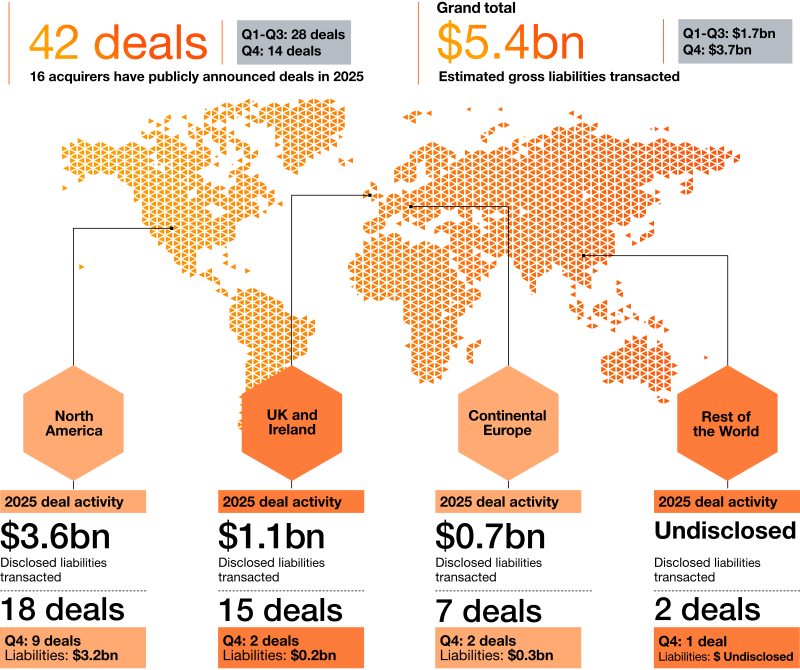
Despite this increase in deal numbers, estimated liabilities transferred were $5.4bn, below the $6bn to $8bn range that has characterised the market in recent years. Rather than signalling a slowdown in overall market activity, this reflects a shift in the transaction mix, with a greater proportion of smaller transactions being disclosed.
Deal size
Approximately 70% of all publicly announced transactions had disclosed deal values. Around 40% of these transactions were sub-$50m liability deals, underlining the levels of activity seen at the smaller end of the market. Capital relief was seldom cited as a key driver for these smaller transactions with seller rationale more often noting operational simplification as a core motivation in disposing of non-core lines and portfolios.
There was also significant activity in the $50m to $250m range with a further half of fully disclosed transactions sitting within this price bracket.
As we reported in September, respondents to our Global Insurance Run-off Survey expected the biggest opportunity for deals in the next 18 months to lie within the $250m to $1bn range. 2025 did not see any publicly disclosed transactions within this bracket but from our conversations with market participants, we expect Q1 2026 to feature deals of this size.
Overall run-off liabilities transferred during 2025 were boosted by two significant transactions announced during the year, each over a $1bn. This included the $1.2bn retroactive reinsurance agreement between Everest Re and Longtail Re, providing adverse development coverage for Everest’s North American Insurance business for accident years 2024 and prior. In addition, Delticus announced a large corporate asbestos deal with Honeywell. These transactions underscore the continued appetite from major (re)insurers and corporates to find sophisticated solutions for their complex, long-duration liabilities.
Territory
As expected, North America (18 deals and $3.6bn of disclosed liabilities) remained a primary hub for legacy market activity throughout 2025, with sustained engagement from (re)insurers and corporates expected to continue.
In Europe, activity increased materially compared with the prior year (7 deals in 2025 vs 2 deals in 2024), driven largely by transactions announced by DARAG and Compre. We expect momentum in Europe to continue into 2026, supported by increasing familiarity with legacy solutions across the region with market education initiatives, including events such as the IRLA Munich conference in October 2025.
Whilst Asia has remained quiet in respect of run-off activity, it has the potential to provide opportunities for the run-off sector stemming from elevated M&A activity in the live market. The Japanese P&C market in particular has seen some notable deals and restructuring activity recently which may generate both local run-off interest as well as opportunities internationally.
Deal type and structuring
The year saw a mix of transaction structures, with corporate liability transactions featuring once again after a quiet 2024. In 2025, there was rejuvenated corporate demand in achieving finality, removing volatility and redeploying capital into core business through the disposal of long-tail liabilities. The deals disclosed last year incorporated liability values from single digit millions to over one billion dollars, reflecting the diversity of solutions sought by corporates.
By contrast, Lloyd’s legacy insurance deals activity remained relatively subdued in 2025 after an active first quarter. As the market continues to soften, we expect there to be increased focus on portfolio optimisation which may result in greater legacy RITC activity. Looking further down the line, capital inflows arising as a result of Lloyd’s London Bridge II initiative may also result in opportunities for the legacy market to support exits over the natural lifecycle of investments.
We see deal structuring continuing to evolve, with increased use of combined LPT and ADC solutions for pure retrospective deals as well as growing exploration of prospective and hybrid structures that can offer greater capital efficiency for sellers. ILS-related activity remains a major theme within the broader reinsurance market and several legacy players have been actively exploring structures to support ILS growth in the P&C market, like forward exit solutions. These solutions have the benefit of providing greater certainty of finality and liquidity for investors and therefore could be a driver in seeing a more diverse set of players participate in structured transactions.
Pricing and risk
General liability, including US casualty, continues to represent a core component of legacy transactions and accounts for a significant share of liabilities transferred in 2025. However, caution persists around more recent underwriting years. Where reserving is viewed as prudent, pricing remains competitive, enabling transactions that deliver both capital relief and potential value creation for sellers. Where uncertainty remains, legacy acquirers have largely maintained pricing discipline whilst exploring the inclusion of certain structural features in deals, like profit sharing mechanisms, to progress to execution.
Despite strong pipelines, transactions have generally taken longer to execute, in some cases reflecting internal governance challenges and the need for deeper data validation. That said, the volume of deals announced in Q4 demonstrates that these hurdles can be overcome where alignment is achieved.
Market feedback suggests that competitive tension remains in most transaction auction processes. There is an appreciation amongst the run-off community that the run-off acquirers are in the business of doing deals and that not all deals done will ultimately be winners, but the continued focus on pricing discipline by market participants is crucial to long-term performance in the aggregate. Established players continue to demonstrate preferences for deals based on scale, areas of geographic focus and business lines, meaning the segmentation of the traditional run-off market that we have written about previously has continued.
Market outlook
Looking at the year ahead, with a more challenging rates environment for the (re)insurance market than in recent times, but continued pressure on growth and earnings, we expect to see increased live market M&A activity. We anticipate that this is likely to create opportunities for the run-off market via carve-outs of non-core portfolios pre- and post-M&A.
The run-off acquirer landscape itself has looked more settled recently, but we continue to see interest from new entrants supported by fresh capital, which is expected to bring some further competition, primarily on the smaller and mid-sized deals. We also anticipate continued innovation in respect of transaction structuring by run-off market participants including further use of prospective and hybrid underwriting structures. It will be interesting to see how traditional legacy players seek to compete or collaborate with other structured solutions providers in this space.
Market Participation and the Underwriting Cycle
The number of counterparties publicly disclosing the completion of a legacy transaction increased steadily between 2010 and 2025, despite some short-term fluctuations. A notable increase in activity was observed around 2018, coinciding with the peak of the soft underwriting market, reflecting an increase in the supply of transactions and the entry of some new acquirers, primarily at the smaller end of the market. Since then, the pace of new entry has moderated and there have been some exits. However, while a relatively small core group of counterparties continues to account for the majority of completed transactions, the number of unique acquirers remains higher than in the early years of the market. This suggests a more established and mature legacy transaction landscape.
In parallel, corporate liability deal activity has followed a gradual upward trajectory with the first deals announced in 2016. This trend points to a growing recognition of retrospective transactions as a credible strategic tool, extending beyond specialist legacy acquirers.
As the market enters another softening phase, it will be interesting to observe whether market conditions once again broaden participation, including from organisations whose core business does not traditionally sit within the legacy space.
We plan to explore the influence of the underwriting cycle on transaction volumes in more detail at our client event on 19 March. Please contact a member of our team for further information.
Non-life insurance run-off deals - 2025 year-end review


Contact us