



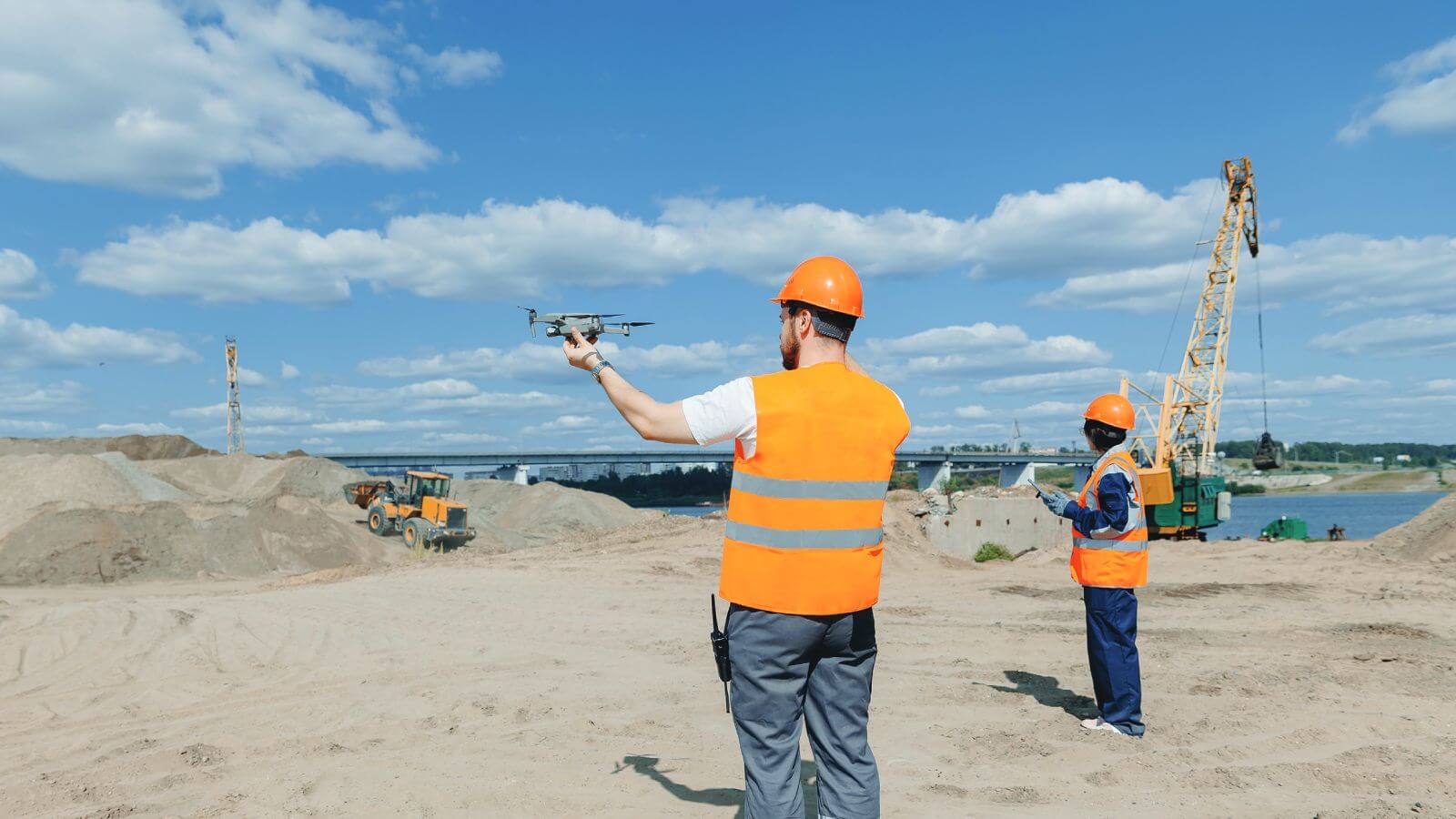
This is a progress update of a case study from 2022, which we recommend reading first for background and context.
Read the 2022 case study Read the full report
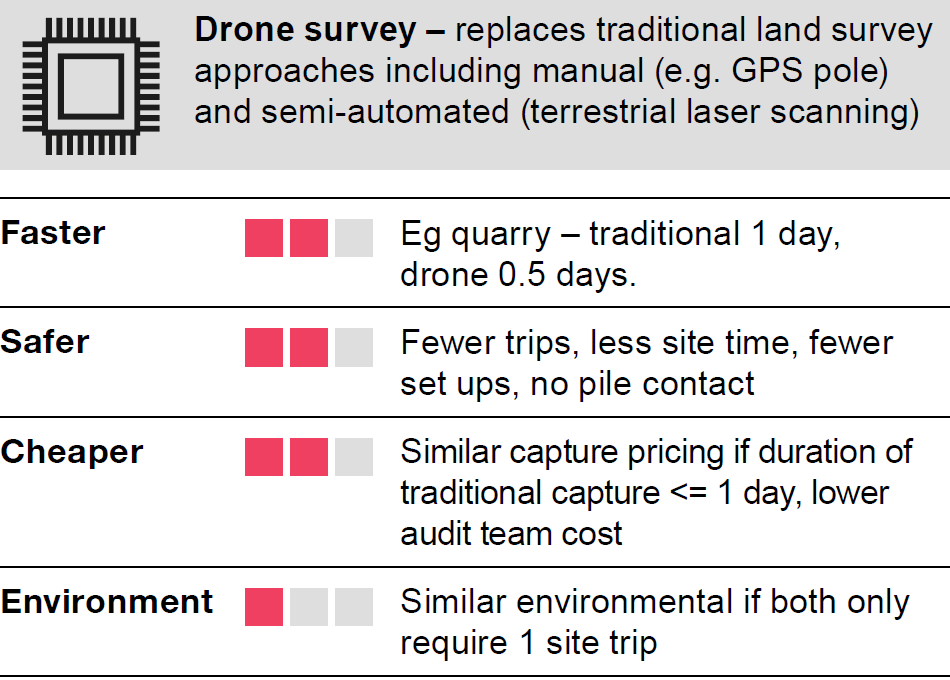
PwC was a trailblazer in adopting drones for inventory auditing in 2018. Since 2021, we have fully integrated drones with business as usual, expanded the scope of inventory covered and delivered services internationally. We have also taken a flexible approach to aerial data, incorporating satellite capture in addition to drones.
In 2018, PwC pioneered the use of drones for inventory auditing, significantly enhancing audit quality and efficiency through technology integration. As a company who frequently talks about the criticality of integrating drones with business as usual, it was important for us to walk the talk and we added drone inventory testing to our official Audit Guide in October 2021. The process includes a checklist for auditors to determine whether drones are suitable and establishes a clear methodology for testing stockpile inventory using drones. Drone inventory auditing has also been incorporated into PwC’s auditor training programmes.
The success of PwC’s drone initiative is evident from the increasing number of audits using drones annually, with many now in their fifth year.
PwC’s drone scope has also expanded to include more than just stockpile volumetrics. Examples include counts of inventory as diverse as fences and cattle. We have also used satellite analytics, including multispectral imagery, to determine planted tree area and health.
This normalisation of operations is reflected in a full set of green traffic lights. Since 2021, both Perception and Implementation have improved. This indicates success in the internal PR efforts required to integrate drone solutions within an organisation and in writing drones into business-as-usual processes.
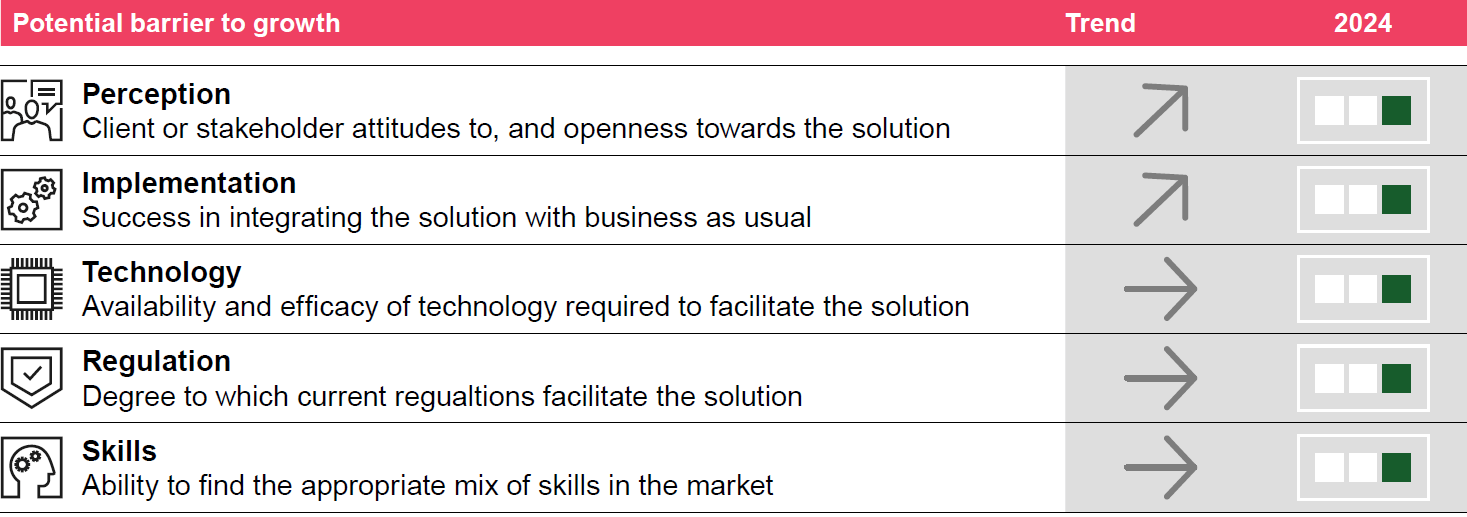
The 2024 colour indicator shown is based on PwC’s current perception of the associated barrier (red indicates an 'issue' and green 'no issue'). The trend shows the degree to which they feel this barrier has changed since 2021. To see a summary of how this organisation's views compare to others, see the chart on page 8 of our main report.
Technology and Regulation have remained fit-forpurpose and, while advancements in autonomous drone technology and beyond visual line of sight (BVLOS) Regulations could further enhance efficiency, they are not currently impediments to growth. PwC is well-equipped with internal expertise and collaborates with approved vendors for data capture and processing, ensuring that Skills are not a concern.
“Through embedding drone technology in our audit methodology, we’re transforming audit quality and efficiency by providing accurate, real-time inventory assessments. Embracing emerging technology, including integrating AI and satellite data into our drones approach, is crucial as we build our vision for the Audit of the Future. It is also aligned to our Human-Led, Tech-Powered global strategy and enables us to enhance trust in the audit and keep pace with our clients’ own digital journeys.”
PwC

An insight into the progress of the UK drone industry from 2021 to 2024
Skies Without Limits v3.0