



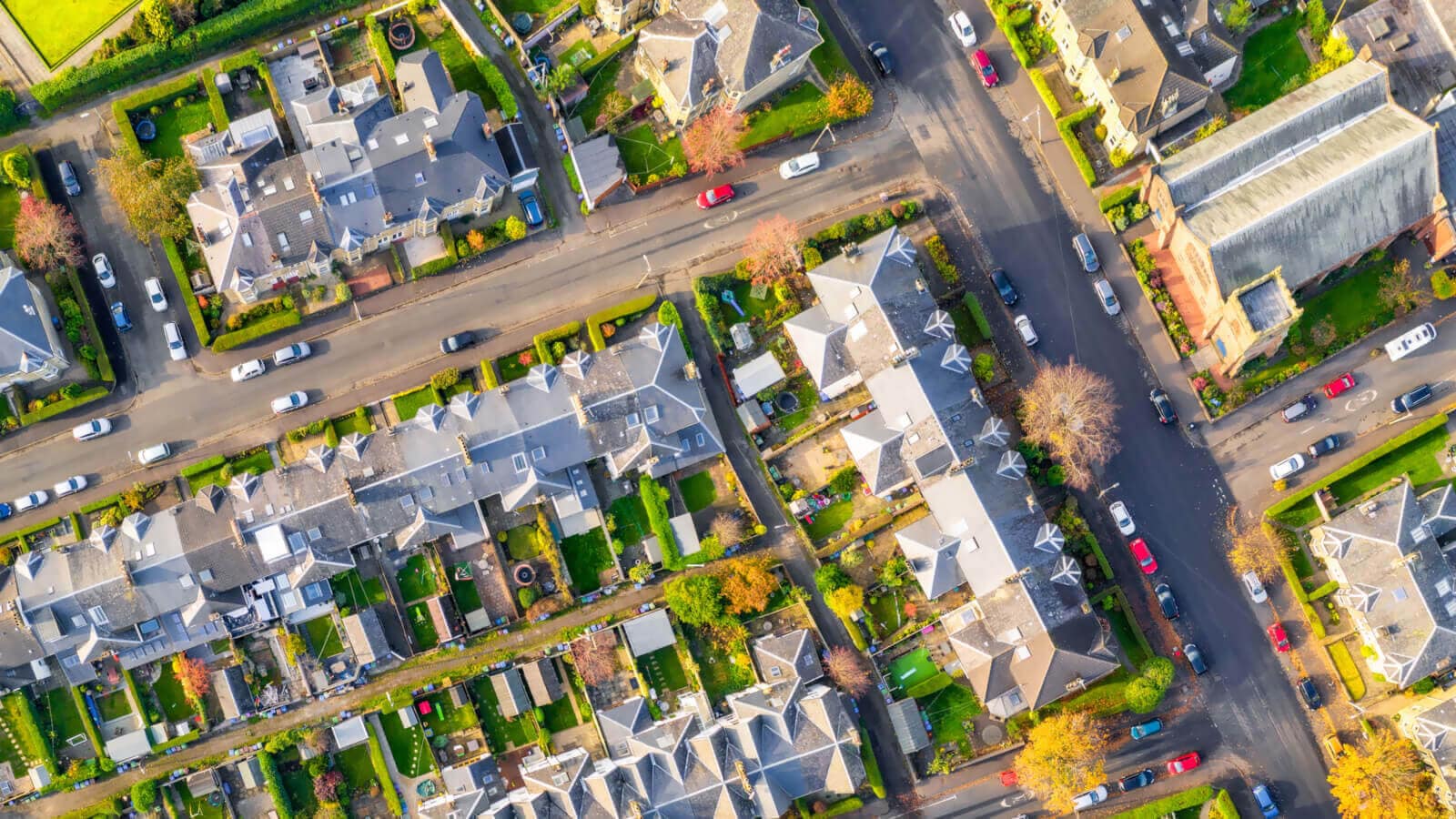
Keeping our houses in good structural condition is a priority for many of us. Major repairs can be costly and disruptive and, of course, best avoided. For housing associations that manage large portfolios of property the scale of the potential issue is much greater and it can be challenging to stay on top of every repair issue, often leading to repairs that are more expensive than would be the case if issues were detected earlier. The CPC states that in social housing alone, more than £6.3bn is spent annually on repairs and maintenance in the UK.
Drones have considerable potential when it comes to building inspection. They can deliver a cost-effective, comprehensive perspective of building exteriors, without the need for scaffolding or working at height. They enable faster, more frequent inspections and, often, earlier detection of issues. Disruption for residents is minimised. Insulation actions can also be targeted by using drones equipped with thermal imaging cameras.
Renfrewshire Council has embraced drones and plans to use them to inspect the 12,000 properties in their social housing portfolio, potentially generating a saving of £4M per year. There are a mix of property types in the portfolio, including 14 high rise towers, all of which need ongoing façade and roof inspections. Prior to 2016, the council relied on scaffolding and mobile elevated working platforms (MEWP) to carry out this work, which was slow, costly and exposed staff to working at height. Implementing drones has enabled them to carry out entire programs of inspection in under two months, a process that used to take years. The data that the drones gather is therefore enabling smarter, more informed decision making and enabling them to move towards a predictive maintenance approach.
The future will see operations like these on a larger scale, with increased levels of drone autonomy and, perhaps, edge AI analysis of defects. Drone data will be combined with data from other sensors to inform predictive maintenance strategies, significantly reducing overall building management costs. There may also be Autonomous drones that are able to act on the data gathered, taking steps to fix simple issues such as missing or cracked roof tiles. Drones are also being used for preventative measures such as spraying buildings for cleaning or vegetation treatment and we expect this to become commonplace, perhaps automatically triggered by the findings of an autonomous inspection drone.
This case study is an extract from the report
Skies Without Limits v2.0