



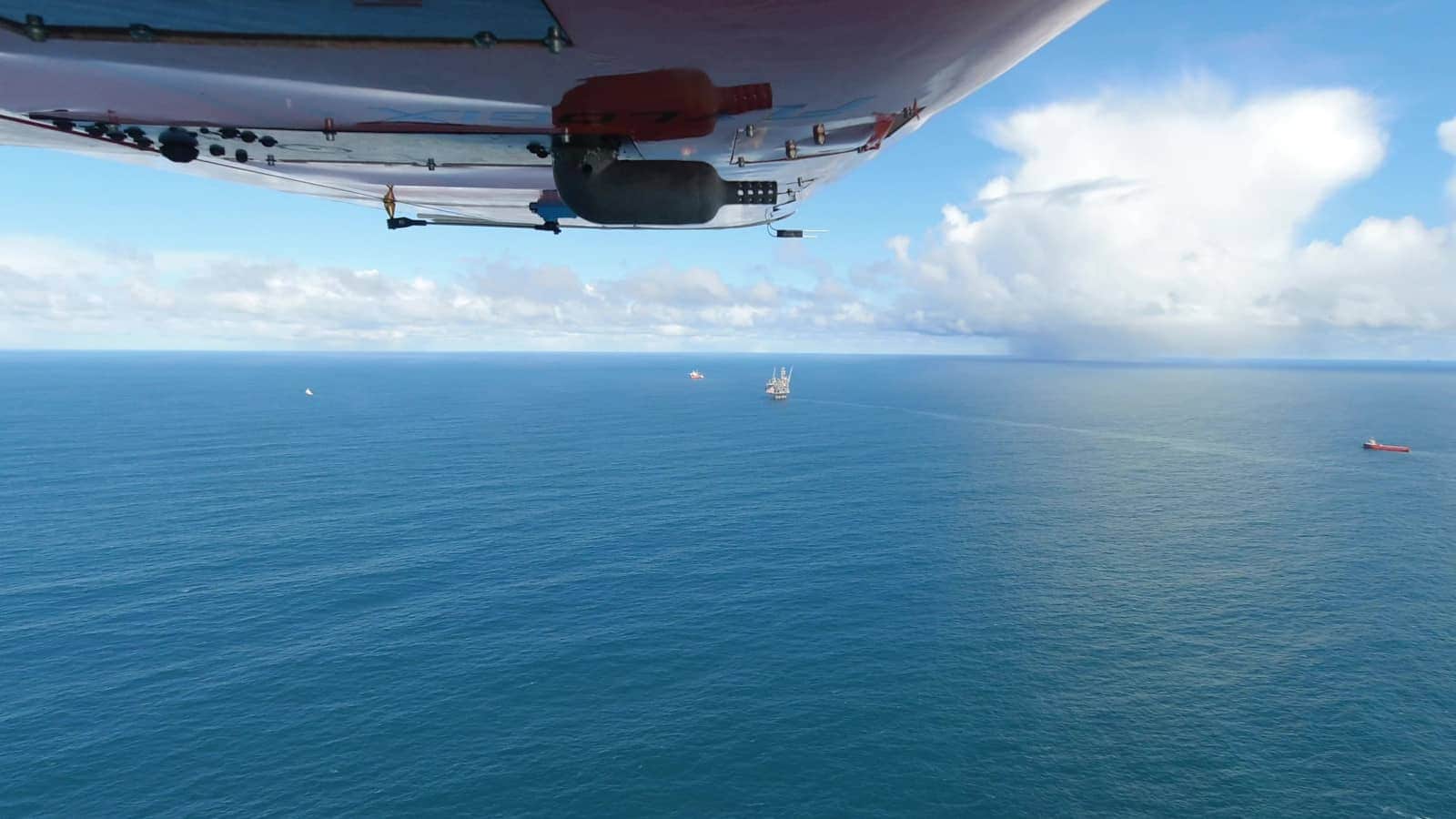
The Oil and Gas industry was one of the earliest adopters of drone technology due to the clear benefits it could bring. For instance, the use of drones to inspect live flare stacks could save an offshore platform £4 million per day (refer to the original Skies Without Limits report) as there is no need for the shutdown that would be required for rope access. Drone use is now widespread, with other common applications including internal storage tank inspections and real time methane detection. This has brought with it large cost savings as well as vast improvements in health and safety, with a reduced need for employees to work in hazardous environments.
The industry’s relative maturity has not slowed the adoption of more advanced drone technologies. In recent years, some companies have begun to use fixed wing drones for BVLOS (beyond visual line of sight) flights over offshore oil platforms. The approach enables the pilot for these flights to remain onshore and monitor the drone’s flight and data collection. This has started to deliver further efficiencies to an industry that was already thought to be close to realising the maximum potential of VLOS (visual line of sight) drone use.
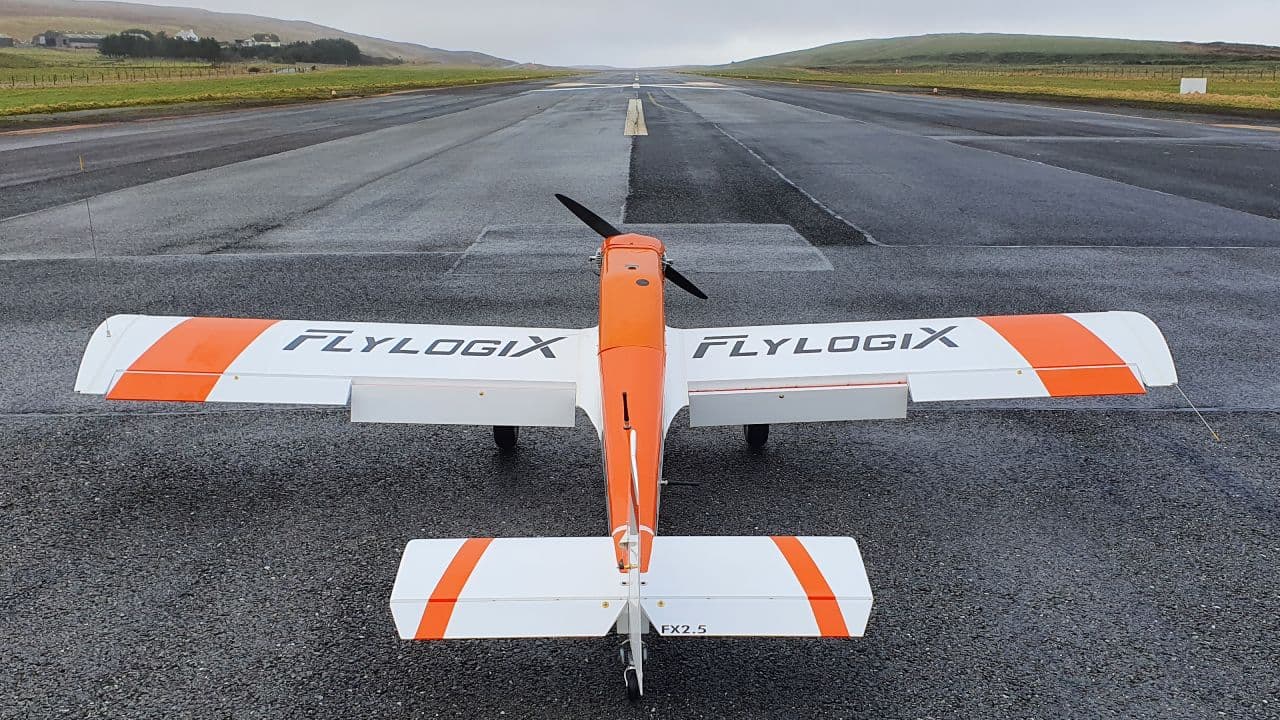
One company pioneering BVLOS in Oil and Gas is Flylogix. They fly BVLOS drones to monitor methane emissions from offshore platforms, amongst other activities. In 2017 they successfully conducted their first BVLOS drone flight over the Irish sea, gathering data from an oil and gas platform 30 miles from the onshore pilot. They now conduct Routine BVLOS methane detection and facility monitoring flights over most of the North Sea oil platforms and have already made inroads into other new markets and territories. Their success demonstrates the potential that can be realised by understanding the market, building the right technology and working collaboratively with the CAA.
“Unmanned aviation has the potential to radically change how we operate in remote environments. By removing people from high-risk areas and operations it increases safety and efficiency. It can reduce carbon emissions by up to 100 times (compared to manned vehicles) and is much more cost-effective overall than the methods used to date for things such as offshore monitoring and maintenance. Our drones enable new ways of working that were previously unachievable or not economically viable, not just in oil and gas, but in a number of industries. We have carried out trials and live projects in delivery logistics, emergency response, routine surveillance, methane emissions monitoring. We envisage our technology providing huge benefits in terms of efficiency, cost-effectiveness, safety and reduced emissions in other areas such as tracking livestock, surveying pipelines, monitoring waterways, for example. We are bringing together artificial intelligence, satellite communication and low-cost electronics to pioneer a new generation of small, highly efficient unmanned aircraft with an operating range of up to 500 kilometres. Every operation is piloted from the shore and monitored centrally, with real-time data and insight.”
Flylogix
In the future, in addition to Routine BVLOS drone flights, the Oil and Gas industry will likely see an increased integration between drones and other robotics. Use of AI to automate processes for data collection, analysis and, in some cases, repair is also likely. Furthermore, we expect increased prevalence of sensors that “touch”, building on the current small volume of drones that, for example, can apply probes to surfaces to obtain thickness readings. Oil and gas facilities will increasingly be designed with drones and robotics in mind and these technologies will become an integrated part of the platform. This will lead to a future state where drones will pop out of their integrated “box” on the platform and autonomously fly the missions set by the AI core or triggered by IoT sensor alerts. The drone feed will be analysed by AI in real-time and any repair actions triggered or queued for review.

This case study is an extract from the report
Skies Without Limits v2.0