



Dermot Ryan
Director of Digital Transformation, NHS EnglandClient
NHS England
Industry
Health
Our role
End-to-end transformation support
Featuring
NHS frontline digitisation
Moving from paper to digital records is a “once-in-a-generation opportunity to create a truly digital-first health and care system,” says Minal Patel, Programme Director, Digital Transformation, NHS England.
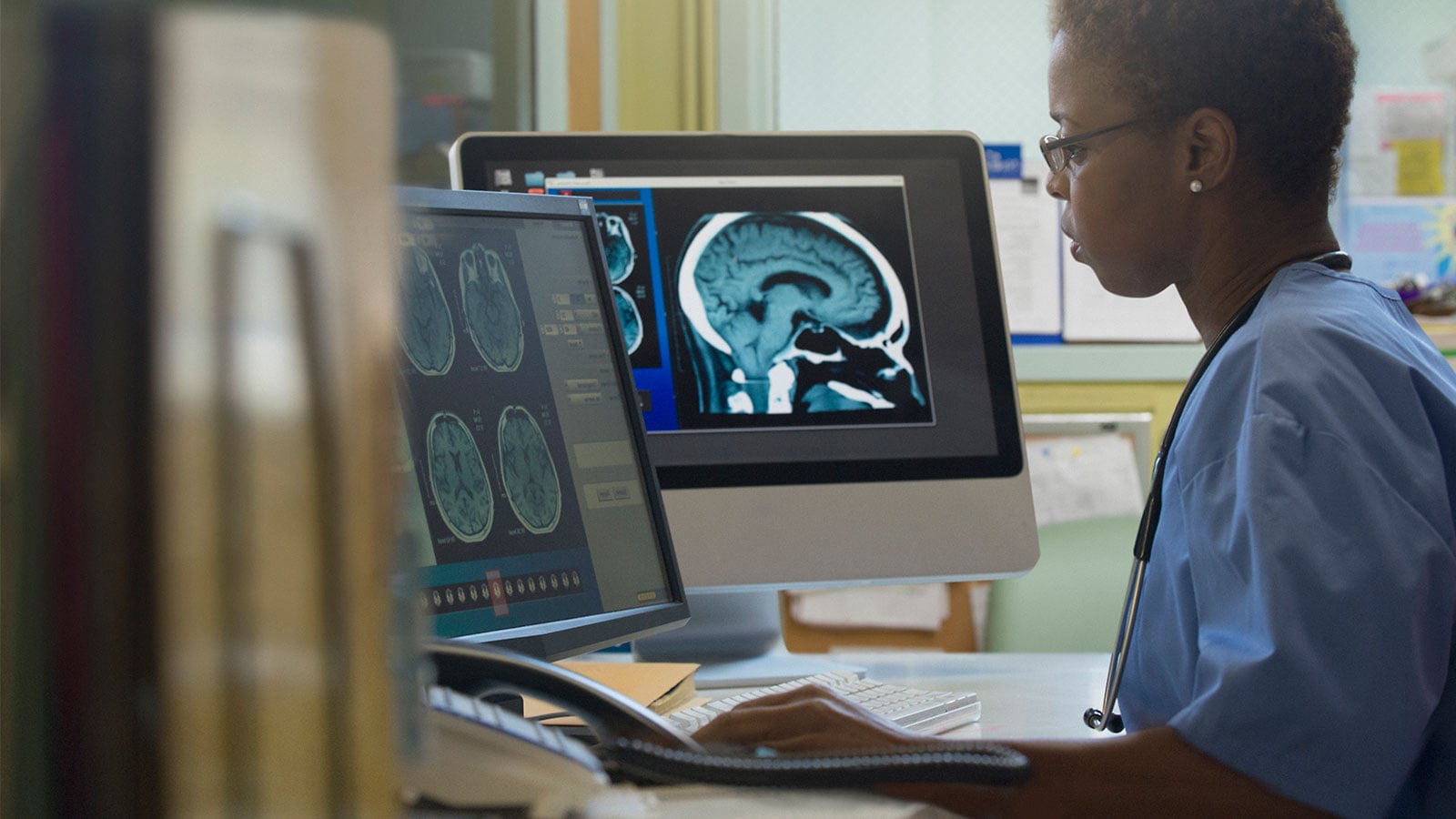
NHS England’s Frontline Digitisation programme aims to give staff access to “the right information, at the right time, wherever they need it,” explains Patel. Electronic patient records (EPRs) sit at the core of modern healthcare, bringing together a patient’s hospital record, test results and prescribed medicines into a connected digital record. This gives medical professionals access to real-time data, enabling quicker decisions, improving efficiency and enabling a more seamless experience for patients.
This move, a key step in delivering on the Government’s ten-year health plan, is “hugely important in improving the day-to-day role for clinicians,” explains Professor Rajarshi Bhattacharya, Consultant Orthopaedic Surgeon and Divisional Director of Surgery and Cancer. “They remove the interface friction between primary and secondary care, meaning GPs receive information from hospitals straight away, and multidisciplinary teams can all see the same data at the same time”.
Video
Digitising the frontline
5:00
More tools
Transcript
Connected care
By March 2026, the aim is for 96% of trusts across NHS England to have an EPR system, with the remaining in delivery. The scale of the programme is vast and hugely complex, working with more than 170 organisations, each with their own organisational and digital maturity.
“Often, these organisations are operating in silos. Multi-disciplinary teams can’t communicate easily with each other, so this is really about knitting it all together. And, crucially, ensuring all NHS trusts and hospitals can reach a minimum digital standard.”
James Macpherson,Partner, PwC UKWe partnered with NHS England on the project, working with national and local NHS teams to design and deliver a first-of-its-kind support offer across the £2 billion programme.
“The first thing we did was to stratify organisations and understand where they were relative to the digital maturity standards that we were looking to set,” explains Dermot Ryan, Director of Digital Transformation, NHS England. From these starting points, each hospital trust received scaled levels of support towards expanding or improving their EPRs. “We focussed on those organisations who have the furthest to go”.
From technology to transformation
“Building workforce capability has been integral to the roll-out. It’s not just an IT change, this is mainly about the workforce and a massive transformation for them to work in a different way.”
Robbie Cline,Chief Information Officer, North West London Acute Provider CollaborativeAlongside tailoring support to each organisation, the programme set out to make the most of expertise and learnings from across the NHS. We worked with NHS England to design the ‘Frontline Digitisation Support Offer’ (FDSO) – a centre of expertise to share knowledge and capability within the NHS.
“We made it a priority to work in partnership with NHS colleagues to understand how we could make the roll-out seamless and work for them. This was about making digital work for people, not the other way around,” says Indi Singh, Director, Health, PwC UK.
The programme introduced new ways to engage with NHS staff – through learning labs, events and sharing of early experiences – with the support offer constantly evolving based on local needs. It also included guidance on optimisation to deliver ROI, and promoted consistent approaches across organisations to help standardise care delivery. Together, these steps have built efficiencies and helped trusts avoid repeating the same mistakes.
“Working with PwC, we supported other NHS organisations following a similar path to ours,” explains Cline. Ultimately, this approach meant faster adoption, better use of resources, and reduced costs for other trusts and hospital sites when rolling-out EPR systems.
Reimagined healthcare
The Frontline Digitisation programme is already improving the delivery of safer, more efficient care.
“EPRs enable members of multidisciplinary teams within hospitals to all see the same information about the patient at the same time, to come to better considered decisions. That equates to hundreds of lives across the NHS each year.”
Dermot Ryan,Director of Digital Transformation, NHS EnglandMeanwhile the average length of stay for inpatients has been reduced by 4.5%, saving hundreds of thousands of hospital bed days each year. For patients, that means getting home sooner – back with their families, back to work, and back to their lives.
Through EPRs, patients also have greater access to their own data. For example, Cline notes the “Care Information Exchange”, available across North West London trusts, allows patients to “see their own patient record, driving ownership, transparency and control”.
“Electronic patient records put care right back into the hands of the patients,” says Macpherson. “We’re living in an age where people expect their care to be delivered in a way that’s similar to the way they transact at a bank, or the way they shop. Transformation is needed for the NHS to deliver services in a way which really empowers and enables patients to live better lives”.
A digital NHS
Looking ahead, with EPRs embedded across the NHS, the ambition is to “move to a more preventative way of caring for ourselves, utilising the digital front door of the NHS App and at the same time harness newer technologies, such as artificial intelligence,” explains Singh.
This includes scaling the use of technology like AI scribes and voice recognition to update patient records in real-time. “Removing the computer between the patient and clinician allows more time to care and focus on the patient in the room,” says Cline.
By rolling-out EPRs, the foundations are also laid to ensure the NHS can further optimise additional aspects of its digitisation, such as its Federated Data Platform.
Ultimately, the aims of the NHS Frontline Digitisation programme come back to helping people, as Patel articulates. “We hope its legacy is that it changed lives, that it gave time back to clinicians, dignity back to patients, and laid the foundation for a smarter NHS.”
Our contributors:
Minal Patel
Programme Director - Frontline Digitisation & Connecting Care Records, Digital Transformation, NHS EnglandRobbie Cline
Chief Information Officer at North West London Acute Provider CollaborativeProfessor Rajarshi Bhattacharya
Professor Rajarshi Bhattacharya, Divisional Director of Surgery and Cancer at Imperial College Healthcare NHS TrustJames Macpherson
Health Transformation Partner, PwC UKIndi Singh
Digital Health Director, PwC UKFeatured client story
Walsall Council transformation improves services while cutting £80 million in costs
Industry: Government & Public Sector
Theme: Transformation
It’s a conundrum faced by local councils across the UK: how do you maintain key services that support the quality of life for residents in the face of required budget cuts?


Healthcare
Delivering complex transformation
Contact us

Leader of Industry for Government and Health Industries, PwC United Kingdom
Tel: +44 (0)7841 783022


Follow us


