



“Do what only you can do”: Compass Group boss says CEOs must prioritise
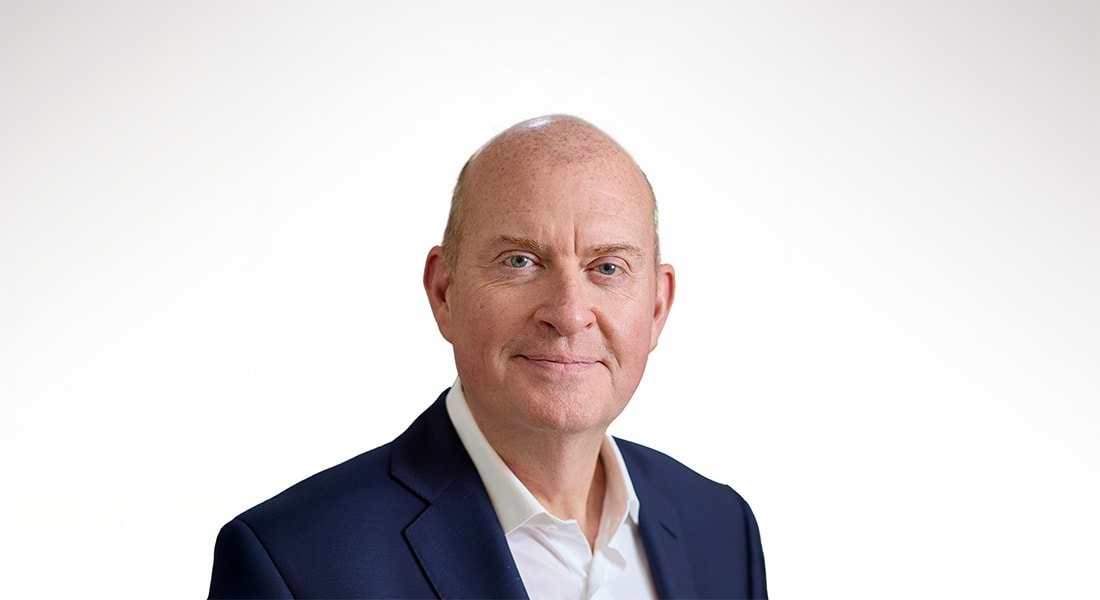
Dominic Blakemore, CEO, Compass Group
Business leaders should only focus on key priorities and give themselves the headspace to think differently about opportunities that could reshape their business model. So says Dominic Blakemore, CEO of Compass Group, the world’s largest catering business.
As the modern CEO role becomes increasingly complex with every competing priority, Blakemore says business leaders must prioritise what matters most to the future of their business. Only by liberating themselves from day-to-day responsibilities can they truly focus on what is important. That also means they must surround themselves with the right leadership team.
Focus on priorities
It was Blakemore’s own Chief People Officer who gave him advice he now lives by—“do what only you can do.”
“You need to screen out extraneous noise and focus on understanding your business, your industry, your business model and the criteria for success,” he says.
“As a CEO, you should be focused on growth and talent. If you are doing anything else, then you are not organising your team in the right way.”
It is not just a growing to-do list that sharpened Blakemore’s focus on the key components of sustainable growth. As the world’s largest catering business, serving offices and workplaces, healthcare and education settings, and corporate hospitality venues, Compass Group was brought to the brink during lockdown.
“I remember sitting there in the depths of the pandemic, thinking I could be the CEO that sees this business go under,” says Blakemore.
See opportunity, not threats
But the pandemic left Blakemore pragmatic about uncertainty and disruption.
“When you’ve experienced the closure of half of your business overnight, with no imminent end in sight, I don’t think much else scares you,” he says. “You develop levels of resilience that you wouldn’t otherwise have.”
During the pandemic, Blakemore says Compass Group rapidly evolved its operating model. The result was a business that was more flexible, more resilient, and ready for its next stage of high growth.
“I believe it is our role as leaders to draw on that resilience, take educated risks and empower our teams to do the same. The most successful business leaders I have come across are more naturally inclined to see disruption as an opportunity to pull away from their competitors.”
Despite sharp decline in Covid times, Compass Group’s revenues have grown from $25 billion in 2019 to $46 billion in 2025, while its share price has gone from a five-year low of around £11 the week of lockdown in March 2020 to a high of around £28 in recent times.
Continued growth remains the priority. “We have an incredible total addressable market. We are twice the size of the number two and three combined but still have less than a 15% global market share. We’ve tripled the market cap over 10 years, and we can’t see a reason we couldn’t do it again.”
Acquisitions have been a key strategic lever of growth for Compass Group. Recent acquisitions have focused on Europe, bringing in small, innovative businesses who can help the Group unlock growth in new and adjacent sectors and access new talent.
“We see adjacencies to our core in very immature, fragmented sectors that are ripe for consolidation. We acquire the business model best placed to win, provide capital, and supercharge organic growth,” he says.
There are “non-negotiable” protocols acquired companies must comply with, around health and safety, cyber security, and compliance. But beyond that, Blakemore’s approach is about empowering the acquired teams to continue doing what made them successful in the first place. “We help them accelerate their growth and thrive within a secure environment,” he says.
Embrace entrepreneurial thinking
Blakemore says Compass Group has learned important lessons about agility, entrepreneurial culture, innovation, risk, and decision-making from the businesses it has bought. He says too many businesses miss such opportunities by changing the identity of acquired businesses, forcing them to become part of a homogenous corporate core.
“A lot of businesses we acquire are highly entrepreneurial. They’re fast moving. And we’re trying to encourage our corporate core to be more entrepreneurial,” he says.
Inspired by bold, creative start-ups, Blakemore is encouraging his teams to think more entrepreneurially about products and services, ranging from dynamic pricing to tailoring products and services to meet rapidly evolving consumer preferences.
Data and AI are proving to be key enablers in addressing emerging opportunities.
“Hospitality will always rely on strong human relationships,” he says. “Relationships with our clients, with our consumers and our colleagues are the heartbeat of our organisation, but AI has helped teams streamline routine tasks, giving colleagues that valuable headspace to work on product and service innovations, while also providing deep insights to inform better decision-making.”
It’s an example of Blakemore’s intent to harness opportunities and embrace the fact that sustained growth requires a clear focus, relentless effort and innovation—however large the organisation’s market share, and however historically strong growth has been.
29th UK CEO survey
Read full findings
CEO interviews: Exclusive insights from UK business leaders
Explore what leading UK CEOs have to say about their business plans and priorities.

Avril Palmer-Lavery
Constellation Automotive Group

Louise O’Shea
CFC

Dominic Blakemore
Compass Group

Russell Barnes
David Lloyd Clubs

Rain Newton-Smith
CBI

Dhara Vyas
Energy UK

Michael Topham
Biffa

Graham Charlton
Softcat

Lee Perkins
Civica

Paul Ludlow
Carnival UK & P&O Cruises

Mary Huen
Hong Kong and Greater China & North Asia, Standard Chartered
Contact us