



This is a progress update of a case study from 2022, which we recommend reading first for background and context.
Read the 2022 case study Read the full report

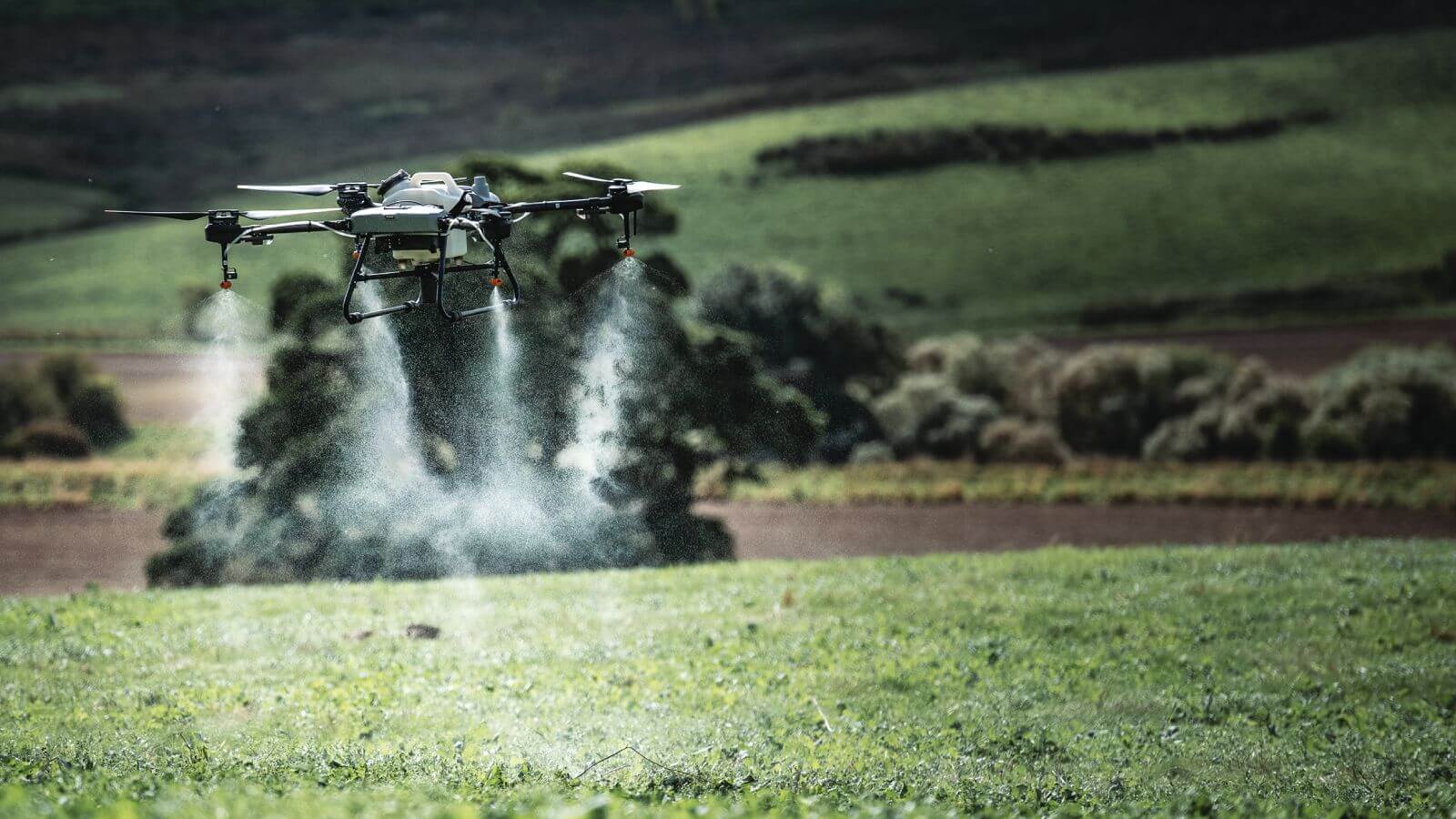
Scanning, spraying and seeding is now a reality in the UK, thanks to the progress Auto Spray Systems, Drone Ag and others have made with the CAA and CRD (Chemicals Regulation Directorate) over the last 3 years. Although operations are currently small-scale, there is huge potential to grow the market, catch up with the rest of the world and contribute to UK food security when more chemicals are approved for spraying, and flight permission is simplified.
In this update, we’re going to look at the progress of two case study companies, Auto Spray Systems and Drone Ag. Auto Spray Systems have progressed significantly since 2021 and are now scanning, spraying and seeding crops in the UK. Highlights over the last 3 years include:
- Operational Authority (OA) for large spray/spreading drones from CAA in (2022)
- Lantra training certification for spray drone training (2023)
- Listed as a productivity item in the Farming Equipment and Technology Fund (FETF)[1] (2024)
- Applied liquid and granular PPPs[2] (regulated chemicals) with HSE approval and led other PPP initiatives[3] (2024)
Drone Ag have also progressed significantly since 2021:
- Onboarded several sizeable agronomy firms to their Skippy Scout platform (app-based crop monitoring using drones, refer to the original case study or Skippy.farm) which is being used in 21 different countries
- After allowing their 2015 permissions to elapse, Drone Ag have also obtained new permissions, but focus more on training, case studies and hardware supply, rather than direct drone services for clients
Auto Spray Systems and Drone Ag have different views on whether their business has grown at the rate expected in 2021. Auto Spray Systems claim to have exceeded their planned rate of growth and Drone Ag state that their growth has continued to trend up, despite a “difficult economic landscape.”
Drone Ag believes that their Skippy Scout platform has reached commercial volume both in the UK and globally, evidenced by several large clients utilising their solution. In contrast, Auto Spray Systems notes that there are various limiting factors, primarily authorisation to spray PPPs, which have prevented them from reaching commercial volume in the UK. However, they can understand the rationale and say:
“Approvals for PPP application by drone are coming through now which will allow the market to grow in a manageable way that will allow best practice to be established rather than a “free-for-all” rush that would happen if those restrictions were not in place. In many ways, these limiting factors are what will make this roll out successful in the long run.”
Auto Spray Systems
Both companies agree that agricultural drone implementations are at a small scale and have considerable potential to grow, thereby increasing food security and land use efficiency. Growth potential could be realised if chemical regulations were less restrictive (compared to other countries) and the complexity and cost of obtaining flight permissions was reduced significantly.
The diagram below compares Auto Spray Systems and Drone Ag’s perception of barriers to growth.

The 2024 colour indicator shown is based on Autospray System's / Drone AG's current perception of the associated barrier (red indicates an 'issue' and green 'no issue'). The trend shows the degree to which they feel this barrier has changed since 2021. To see a summary of how this organisation's views compare to others, see the chart on page 8 of our main report.
Overall, both companies are positive about where they find themselves in 2024. Auto Spray Systems (focussed on spraying and seeding over the last 3 years) ratings indicate significant progress from 2021 with all trends up. In contrast, Drone Ag, which has focussed mainly on their crop monitoring software in this period (but has continued to offer drone spraying/spreading hardware and training), believes only Technology has trended up (green).
“Technology development has massively outpaced British demand since 2021 and legislation lags behind.”
Drone Ag
Regulation (amber – up for Auto Spray Systems, flat for Drone Ag), as mentioned above, is limiting growth. Both companies believe that agricultural drone use will only begin to scale once PPP authorisation is coupled with simplified, lower-cost flight permissions. This may be achieved by establishing simpler processes for obtaining flight permission such as a Pre-Defined Risk Assessment (PDRA) for agricultural applications.
Auto Spray Systems note that many other countries operate under less restrictive chemical regulations than the UK and highlight two significant differences.
“Firstly, they [other countries] can apply any PPP onto the crops, because there is less regulation. Secondly, they can use Ultra Low Volume of water rates when applying these chemicals. So typical application rates will be in the region of 10-15L/Ha as opposed to 200L/Ha in the UK. We have to make approximately 15 times as many flights as our global equivalents.”
Auto Spray Systems
Drone Ag agrees that chemical regulations are restrictive and expensive.
“…chemical approval for drone sprayers remains frustratingly out-of-reach” “They [the CRD] make a point of stating that they are “open for business” but the path to approval that they have laid out is costly and slow. Stakeholders (drone companies, their representatives, and chemical manufacturers) must work together with the CRD to trial each individual chemical with drone sprayers. Each trial requires that stakeholders pay the UK government in order to conduct it. This process requires replication for each individual formulation of controlled chemical.”
Drone Ag
They add that flight permissions are complex and expensive.
“the current largest stumbling block to nonchemical drone spraying operations (i.e. operations that can be done right now) in the UK; is the necessity of an OSC…OSCs are very much a “one size fits all” solution, designed to allow complex and fairly niche operations in high-risk environments...OSCs are built from the ground up on a case-by-case basis, and require a well of knowledge and resources in order to complete. They are also restrictively expensive for most.
Our priority focus on crop monitoring as opposed to spraying drones, is in part due to the difficult regulatory landscape we find ourselves in. Auto Spray’s work in this arena is therefore very encouraging and greatly appreciated.
Agriculture is so different from the kinds of work OSCs are mostly designed to facilitate… [and] Agriculture …should be treated as a totally separate kind of operation. A separate type of licensing or permission such as an agrispecific PDRA should be created for these kinds of operations, that facilitates the adoption of beneficial tech…farms are almost entirely in the countryside, this seems obvious, but this is important because although they may border infrastructure or built up areas, the vast majority of field areas are in completely rural settings, meaning risk to people and property is very low.”
Drone Ag
Auto Spray systems note significant progress since SWL2.
“The biggest changes, since the report was released, have been in the accessibility of the CAA and HSE/CRD. The CAA have been very responsive to our evolving licensing requirements and we have engaged very deeply with HSE/CRD on PPP authorisations and are making good progress. However, this is just the beginning. Until there is a PDRA for agri drone operations from the CAA, drone take up will be slow due to the complications of the OSC route… until key PPP products for drone application become commercially approved, the market will remain small”
“If these could be addressed we would reach “commercial volume” within 12 months.”
Auto Spray Systems
All of this indicates that it is now time to act and build upon the progress made so far. We are addressing an issue as essential and fundamental as food security.
“Agriculture is under extreme and increasing pressure to increase efficiency, in order to feed a growing population with fewer and fewer resources.”
Drone Ag


Notes:
[1] A grant scheme designed to support farmers by facilitating access to advanced farming technologies and supporting the agricultural industry’s overall growth and sustainability
[2] Plant Protection Products or pesticides, HSE
[3] Other PPP related activities from Auto Spray: trials underway to change PPP labels to list drone application methods as standard (2024); developing a roadmap for commercial PPP approvals in progress with CRD (2024) with the aim to have 30 products approved for drone application in 2025
An insight into the progress of the UK drone industry from 2021 to 2024
Skies Without Limits v3.0