



This is a progress update of a case study from 2022, which we recommend reading first for background and context.
Read the 2022 case study Read the full report

The Maritime and Coastguard Agency (MCA) has made substantial progress since 2021 and is currently conducting daily BVLOS surveillance missions in the English Channel via their supplier Bristow. While this is impressive, there are regulatory constraints that significantly restrict the coverage area, operating hours, and rapid emergency response capabilities. The MCA is advocating for changes in regulations and risk mindset to enable the use of BVLOS for swift emergency responses throughout their patrol area.
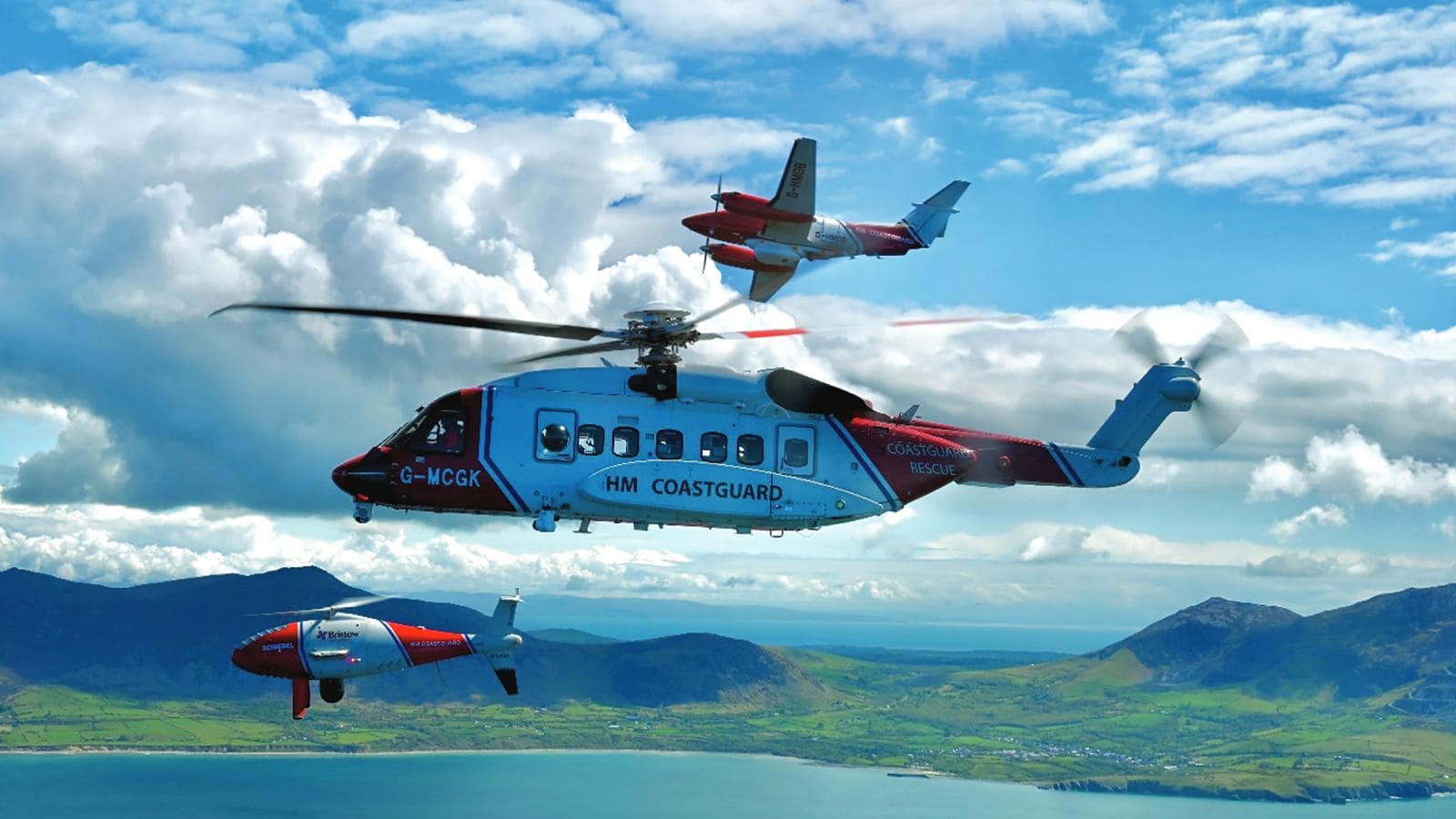
The MCA have taken some big steps since Skies Without Limits V2.0. They advise that they are safely and effectively operating manned and unmanned aircraft in close proximity and flying BVLOS daily, including at night. Their supplier (Bristow) has obtained airworthiness certification for the Schiebel S-100 drone.
The challenge is that the daily BVLOS is based on a TDA (Temporary Danger Area) centred around Lydd. The space covered is a fraction (less than 0.1%[1]) of the MCA’s total patrol area and the TDA approach has many limitations, including a cut-off time. It is also not possible for the MCA to quickly obtain flight permission for emergencies which limits drone use to routine patrol of the TDA area.
These factors collectively contribute to Regulation still being regarded as an issue (flat – red), see below.

The 2024 colour indicator shown is based on Maritime and Coastguard Agency’s current perception of the associated barrier (red indicates an 'issue' and green 'no issue'). The trend shows the degree to which they feel this barrier has changed since 2021. To see a summary of how this organisation's views compare to others, see the chart on page 8 of our main report.
We have upward trends in Perception and Implementation but there is still work to do (amber). Perception has improved internally but public perception can be challenging.
In terms of Implementation, although BVLOS is BAU (Business as Usual), the rest of the organisation has not embraced drones as much as it could have. Non-aviation staff are “scared off” by the paperwork and many expect drones and analytics to be more autonomous.
Technology is flat (amber). Significant gaps remain in the effective development of drone Detect and Avoid (DAA) systems and Unmanned Traffic Management (UTM) solutions. Additionally, the lack of progress by General Aviation in improving Electronic Conspicuity (EC) has been identified as a potential technological barrier to the growth of BVLOS. It could be argued that these issues are as much Regulation as Technology issues.
Finishing with a positive, the MCA remains confident that they have the Skills required to get the most out of drones (flat – green).
The change the MCA want to see in UK drone operations is clear: they want BVLOS in unsegregated airspace to give them the “ability to perform time critical missions and tasks.” Their primary concerns include the CAA adopting a more proportionate approach to risk, especially in relation to short-notice BVLOS operations, and obtaining clear guidelines from the CAA on the necessary steps to expand the scope of BVLOS operations, such as operating drones under state aircraft regulations.
Notes:
[1] UK Search and Rescue region is approximately 2 million square miles, Lydd TDA is approximately 1,000 square miles
An insight into the progress of the UK drone industry from 2021 to 2024
Skies Without Limits v3.0