



A progress update of this case study is now available, but we recommend reading this original version (from 2022) first for important background and context.
Read the progress update Read the full report
According to PwC’s 2019 Trust in Drones Survey, drone use for emergency services is one of the most popular use cases among the public. Respondents supported the use of drone technology to protect people from harm, with 87% of respondents approving of drones for search and rescue. Drones are a tool that have been widely adopted by the emergency services in the last few years, with a range of use cases that are saving lives. Between 2017 and February 2022, DJI recorded 68 instances of drones saving lives in England and Wales alone.
Search and rescue (SAR) is one of the most obvious lifesaving use cases for drones. The birds-eye view that they offer enables rescuers to gain a new perspective on their surroundings and allows them to access hard to reach areas with ease. Through use of a thermal imagery sensor, drones can quickly identify the body heat of missing individuals, which is especially useful during operations with poor conditions and low visibility. The rapid mobilisation speed of drones is also critical when every second counts. With their ability to complement traditional approaches and give professional rescue teams new tools to assist their search, it is clear why they have been so readily adopted by a range of UK emergency services.
The Maritime and Coastguard Agency (MCA) must respond to SAR incidents anywhere within the UK Search and Rescue Region (UKSRR), which is approximately two million square miles. In 2016 they began looking into the advantages that BVLOS (beyond visual line of sight) and VLOS (visual line of sight) drones could bring to both their counter-pollution and search and rescue operations, when used in combination with existing helicopter operations. Routine BVLOS flight in unsegregated space is key for drones to meet the MCA’s requirements and their work with the CAA has already delivered a successful demonstration of safe integration with Unsegregated Airspace.
“To assist with the development of the regulation and airspace, the MCA has, and continues, to work closely with the CAA and has run several demonstrations and trials, utilising large persistent drones and smaller drones, to ascertain the potential value for operations as well as to assist in the development of the regulation.
The MCA recognises the potential advantages that drones could bring to SAR response in the UK, increasing the effectiveness and efficiency of the search whilst reducing the risk to MCA personnel and the overall rescue community.
Potential drone usage ranges from persistent support of enduring SAR operations, to support of rescue teams engaged in coastal rescues and all points in-between throughout the UK Search and Rescue Region (UKSRR). Preventative measures such as beach patrols to pinpoint danger areas and proactive counter pollution operations could also potentially be performed by drones. To achieve this, routine, regular operation of BVLOS drones without the need for special permissions or segregation of airspace is critical.
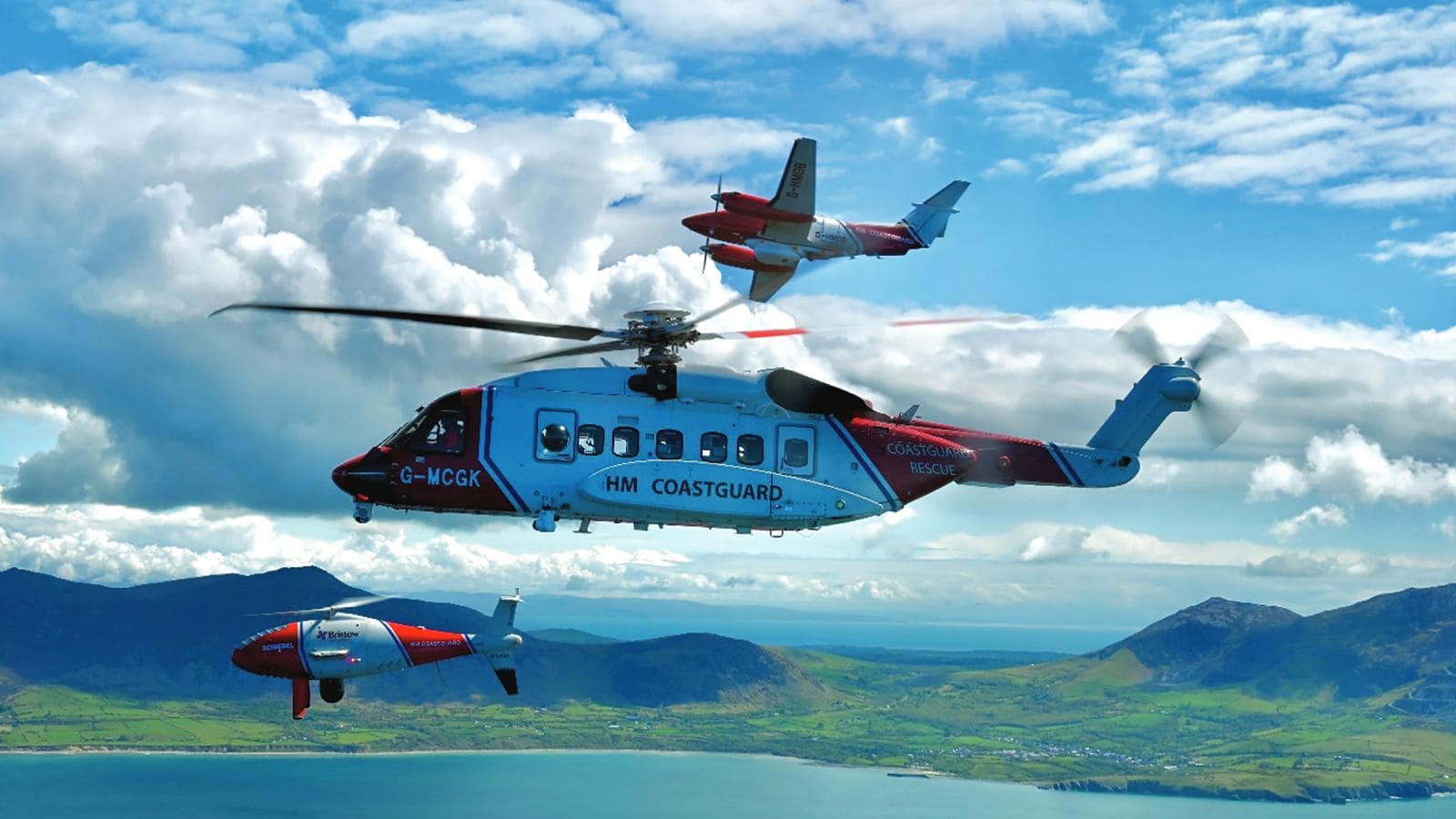
Manned unmanned teaming is critical to SAR operations and the MCA has been working with its current SAR helicopter provider, Bristow Helicopters Limited, to trial the use of a rotary wing drone in conjunction with the SAR helicopters. The MCA took advantage of this capability during summer 2021 to perform proactive beach patrols of North Wales.”
Maritime and Coastguard Agency
Once Routine BVLOS drone flights in Unsegregated Airspace are possible, the future is likely to see further advances in the use of drone technology for SAR. Multiple drones could work together as part of a swarm to rapidly and efficiently search vast areas of land and sea, bringing further improvements to rescue times. Drones may also play a more active role in the rescue itself, with abilities to deliver life-saving equipment directly to those in danger, and larger drones potentially air-lifting injured individuals to safety.

This case study is an extract from the report
Skies Without Limits v2.0