



A progress update of this case study is now available, but we recommend reading this original version (from 2022) first for important background and context.
Read the progress update Read the full report
Last Mile Delivery is concerned with transporting packages to their final destination, for example a parcel or takeaway. Last Mile Delivery at scale means large numbers of drones in the sky and this volume of air traffic requires effective solutions for UTM, Electronic Conspicuity, Detect and Avoid and Drone Autonomy, especially in busy city locations. High drone numbers also have the potential to limit societal acceptance, with delivery drones being one of the least popular use cases in PwC’s Trust in Drones Survey. Only 26% of respondents supported the idea of drone deliveries, however, more recent surveys suggest that approval ratings can drastically increase once a population has experienced the benefits that drone deliveries can bring. Last Mile Delivery solutions also face challenges in terms of packing, take-off infrastructure and delivery landing locations. The latter point is perhaps not as challenging as it first appears, with 85% of the UK population living in detached or semi-detached houses.
The last mile delivery of food and parcels is a rapidly growing market, with food delivery growing by 48.1% in 2020 (Lumina Intelligence UK Foodservice Delivery Market Report 2021). This is despite the fact that using cars, vans and motorbikes for last mile delivery contributes to congestion, causes pollution and can be expensive. Accordingly, the size of the Last Mile Delivery opportunity for drones is huge, with an estimated TAM (Total Addressable Market) of £10bn. As a result, there have been attempts to bring last mile drone delivery to life in the UK, but so far nothing has been deployed in volume. Amazon Prime Air recently wrapped up their operations in the UK to focus elsewhere, despite conducting their first drone delivery trial in Cambridge as far back as 2016.
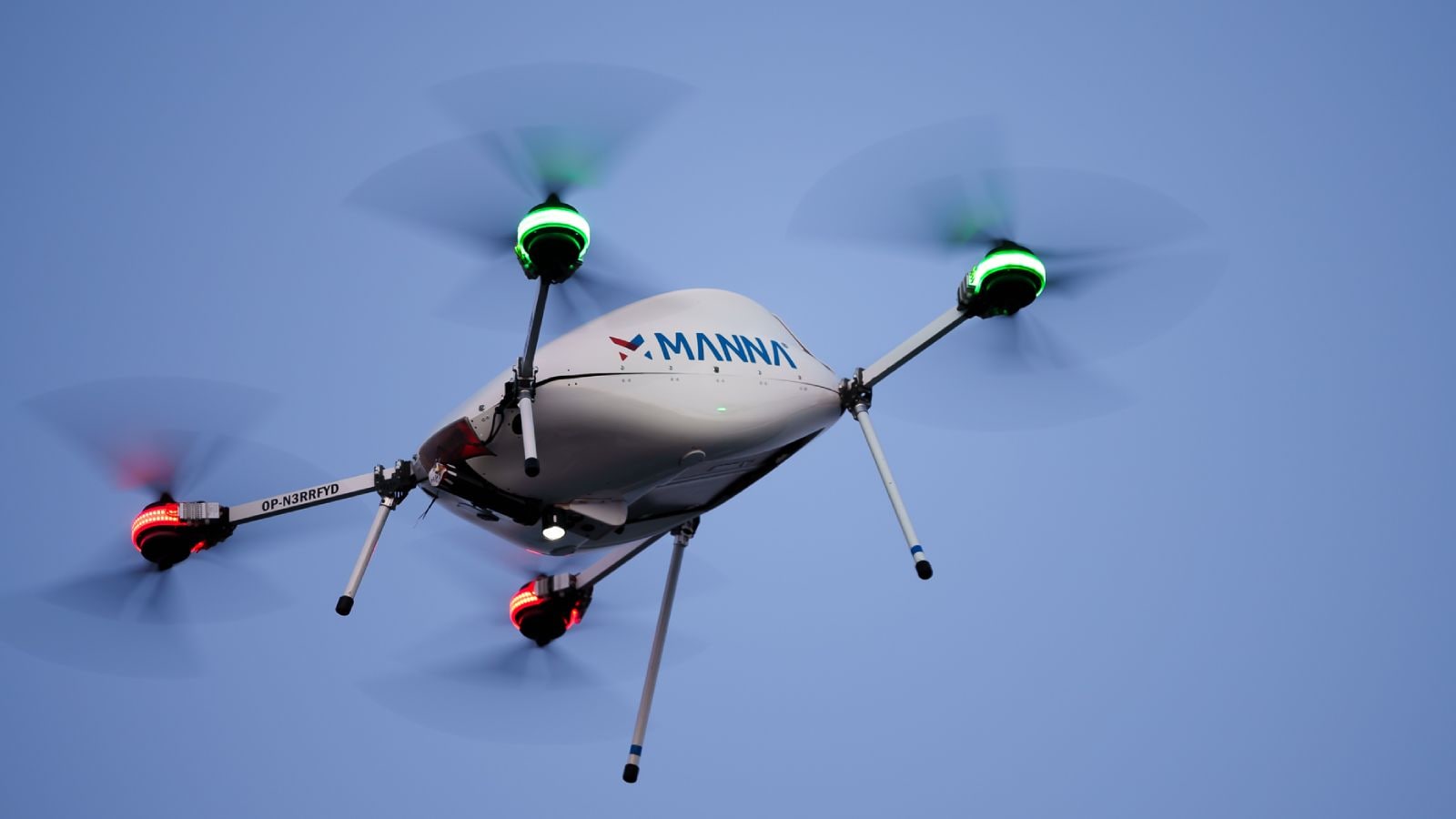
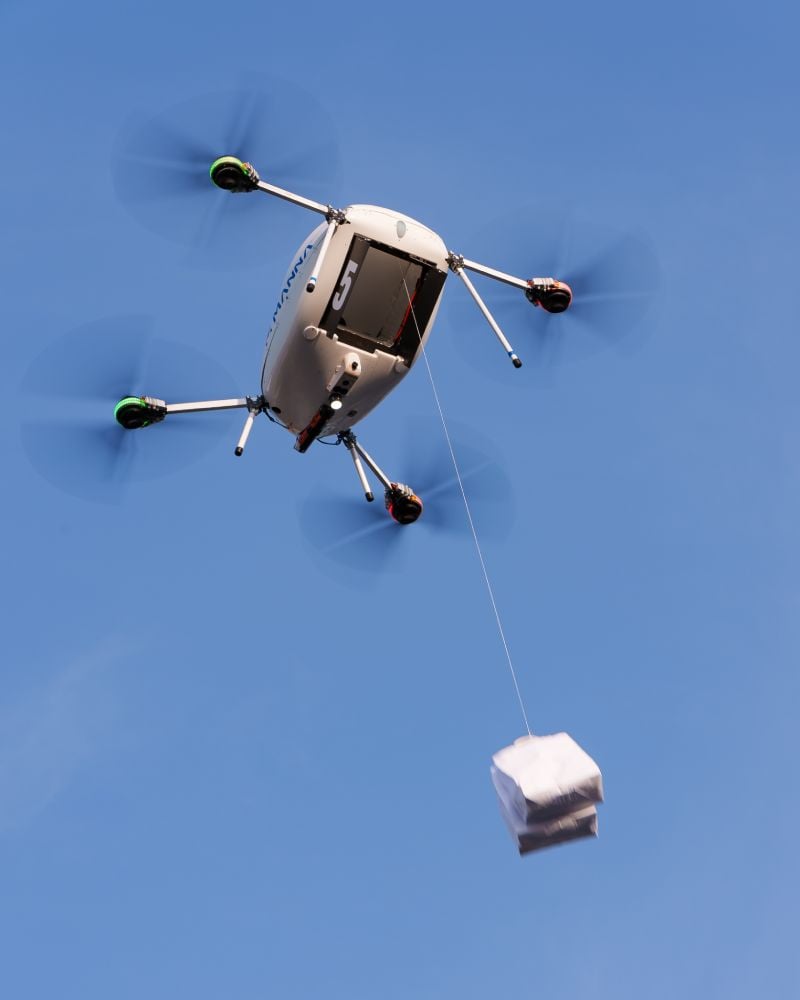
In contrast to the lack of last mile drone deliveries in the UK, there are examples of successful drone delivery services in other countries, some of which are close to home. For example, in Ireland, Manna offers rapid delivery of “coffee, food, medical supplies and more” and currently operates in three locations. A customer can place an order via their app and see it delivered minutes later via drone. The package is lowered to the customer via a biodegradable tether that detaches with the parcel, meaning that the drone does not need to land. Manna’s approach is enabling smaller local companies to reach customers with faster delivery times than any other alternative, including the one day delivery times offered by larger corporations. Manna advises that they have completed over 75k flights to 17k+ customers, and consider that drone delivery is close to becoming a normal part of everyday community life.
“In a world where the operating cost of a road-based delivery is over 6EUR, our partners have enthusiastically embraced a system that provides them a low cost, quiet, private and emissions free solution connecting them to their customers over a total combined operating area of 30 square miles. The local merchants working with Manna can now provide the 45,000 residents (13,000 homes) in our operating area with a better at-home delivery experience than the biggest logistics-focused online retailers on the planet. Better still, as most of our operations have a flight time of just 3 minutes we have seen new customer behaviour around use cases like coffee delivery, and highly perishable products. All local, offline businesses become online with drone delivery. This increases overall demand, and therefore local businesses become more profitable, and jobs are created in the local economy. Already we have delivered to 40% of the homes in our operating area, and have a significant customer cohort of over 50 deliveries each – in only 12 months of operation.”
Manna
If we look at the global picture for Last Mile Delivery drones, we can conclude that other countries such as Ireland, USA, Iceland and Australia have made more tangible progress than the UK. This does not appear to be due to technology (UTM, Electronic Conspicuity, Detect and Avoid and Drone Autonomy, etc.) which is not notably different. It may be due to a different attitude to risk in the UK and, while we wait for technology to advance, there is an opportunity to progress in the meantime, learning from the Last Mile Delivery drone progress around the globe.


This case study is an extract from the report
Skies Without Limits v2.0