






Build trust that protects and powers - with insightful, transparent reporting

PwC Building Trust Awards

Colleagues meeting

About us

Our mission for these awards is simple: celebrate the organisations building trust in society. The Building Trust Awards cover all parts of the economy and the issues that matter - recognising those leading in sustainable and insightful reporting.

Shortlisted companies and award winners stand out from their peers and demonstrate best practice across several areas. They put purpose and strategic vision at the heart of reporting, acknowledging the impact and value these create. They produce a narrative that reflects local and global issues. They use tools and technology with purpose. And they go beyond simply complying with regulations, to drive open communications.

Each award uses specific criteria to assess an organisation's commitment to building trust through open, fair and insightful reporting and communications. Experts from PwC assess all organisations reviewed and generate a shortlist.

Winners are selected from the shortlist by the specially convened independent judging panel, made up of leaders with interest, knowledge and experience in fostering organisational trust, transparency and societal contribution.  

Playback of this video is not currently available

1:56

Relive the highlights from the 2025 award’s evening that celebrated and recognised organisations at the forefront of corporate reporting.

View Transcript

Award categories and criteria 2026

Sector awards

Impact in Social Enterprise

(in association with the School for Social Entrepreneurs)

This award celebrates UK-based social enterprises that excel in impact reporting. We recognise those who demonstrate outstanding social and environmental contributions, showcasing their achievements through both qualitative and quantitative evidence.

Applications are open to all UK-based social enterprises. To enter the awards, applicants must state how they demonstrate a positive social and/or environmental impact, as well as submitting qualitative and quantitative evidence to support their application.

Entry to the 2026 Award closed at 30 June 2026.

Three shortlisted applicants will be invited to celebrate at our Building Trust Awards dinner in London in November 2026.

Find out more

Reporting in Charities

This award recognises high quality and innovative reporting by Charities. The principles of high quality reporting should result in better – not necessarily more – information, and tell the reader a compelling story about what the Charity does, why its activities are important and its impact.

Registered Charities in the Charity Finance 'Charity 100 Index' published in April 2026 are automatically reviewed. There is no need to self-nominate.

We reviewed the latest publicly available trustees' annual report and accounts, and associated year end reporting documents, up to the reporting period ended 31 March 2026.

Reporting in the Public Sector

(in association with the National Audit Office)

The Public Sector award focused on all public sector entities, many of which are consolidated into the Whole of Government Accounts ("WGA"), up to the reporting period ended 31 March 2026, which were audited and published by the Summer Parliament recess date of 16 July 2026. These entities are at the heart of public affairs and the provision of public services, and effective reporting of the use of taxpayers' monies is fundamental to our democracy and our ability to hold bodies to account for what they do. We look for annual reports and accounts that engage with key stakeholders by telling their story in a clear and accessible way, outline how they have achieved their objectives and the challenges they faced, and how they have used public money.

Underpinning our assessment of excellence in reporting in the Public Sector is the concept of innovation – entities who lead the way with a fresh approach to meeting the varied needs of their key stakeholders. Our award continues to give credit to those making real inroads in adopting these concepts and in driving forward fresh thinking and innovation. Transparent and insightful reporting is not necessarily about more information being included but about decluttering existing structures, taking a new and more effective approach to traditional disclosures.

Specific areas we focus on include:

  • A clear and balanced explanation of the impact (both positive and negative) of trends and factors shaping the entity's current and future operating environment.
  • A description of the long-term strategic direction of the entity, supported by short-term priorities, actions and resources needed to keep it on track, with clear use of specific targets and resulting impact on society.
  • An insight into the entity's business model and the key resources and relationships managed by the entity in order to achieve its strategic objectives.
  • A clear, honest and balanced analysis of the profile and dynamics of the principal risks the entity faces, including how these are managed and mitigated.
  • Clear and accessible disclosures of key financial measures that drive underlying performance.
  • Governance reporting that focuses on substance over form – balancing compliance with insight into the culture and values of the entity and how these drive its governance and "tone from the top".

Reporting in the FTSE 350

We reviewed those companies with year ends from 1 April 2024 to 31 March 2025 that were constituents of the FTSE 350 at 28 March 2025. Our review focuses on the richness of content within the annual report, with a particular focus on the strategic report, the sustainability report, and governance report. We also take into consideration key information explicitly linked from the annual report, for example an extended TCFD document or separate sustainability report. There is no need to self-nominate.

It's clear that investors, regulators and wider society want more, and better, information about how companies are balancing the needs of stakeholders as they tackle inequality and supply chain disruption and address the growing urgency of climate change. Against a backdrop of increasing regulation, the challenge for companies is to focus on reporting what is material to their business and relevant to their strategy rather than such issues at large and to do so in a way that engages the reader.

This award celebrates those companies that report well on these areas and present a clear, coherent and integrated strategic narrative across their channels of communication. Our review process looks for companies that use strategy as the backbone for the narrative; acknowledge their wider impact, risks and opportunities; explain the role of good governance; and show how their short-term actions and longer-term priorities create value for their key stakeholders and promote the resilience of their business model.

Thematic awards

Sustainability Reporting in the FTSE 350

The FTSE 350 and Public Interest Entities as at 31 March 2026 were reviewed.

The period under review covered reports with year ends from 1 April 2025 to 31 March 2026, and we reviewed Annual Reports, as well as corporate ESG or sustainability reports (or micro-sites), corporate responsibility websites as well any supplementary reports such as those covering climate-related financial disclosures.

This year’s review continued to focus on both a broad assessment of ESG reporting, as well as a more focused analysis on climate risk related reporting. The award aims to assess the depth and relevance of the reporting offered throughout the publicly available information provided to stakeholders. In particular we will focus on how well companies demonstrate the connection between their financial performance with a clear environmental impact assessment (including the transition to a low carbon society) as well as delivering societal contribution and impact, that this is recognised in their purpose and delivered in a sustainable manner.

The award will continue to consider reporting alignment with TCFD as well as how standards and reporting frameworks created by or in development with the ISSB, the EU and others such as the TNFD are being incorporated into current and/or future reporting.

We are also considering how AI and technology are changing the reporting agenda and how both companies and PwC embrace this.

Social Reporting in the FTSE 100

The FTSE 100 and Public Interest Entities as at 31 March 2026 were reviewed.

The period under review covered reports with year ends from 1 April 2025 to 31 March 2026, and we reviewed Annual Reports, as well as corporate ESG or sustainability reports (or micro-sites), corporate responsibility websites as well as any supplementary reports such as those covering climate-related financial disclosures.

This year's review continued to focus on both a broad assessment of ESG reporting, as well as a more focused analysis on climate risk related reporting. The award aims to assess the depth and relevance of the reporting offered throughout the publicly available information provided to stakeholders. In particular we will focus on how well companies demonstrate the connection between their financial performance with a clear environmental impact assessment (including the transition to a low carbon society) as well as delivering societal contribution and impact, that this is recognised in their purpose and delivered in a sustainable manner.

The award will continue to consider reporting alignment with TCFD as well as how standards and reporting frameworks created by or in development with the ISSB, the EU and others such as the TNFD are being incorporated into current and/or future reporting.

We are also considering how AI and technology are changing the reporting agenda and how both companies and PwC embrace this.

Tax Reporting in the FTSE 350 – UK-Focused Companies

UK-Focused Companies and Multinationals

The FTSE 350 as at 31 March 2026 were automatically reviewed, assessing voluntary tax disclosures in annual reports, published tax strategies, sustainability or corporate-responsibility reports, and standalone tax reports.

[Insert refreshed regulatory commentary covering CSRD/ESRS, Pillar Two, public country-by-country reporting (pCbCR) developments – to be supplied by Andy Wiggins.]

The awards recognise clear explanations in the following areas:

  • Tax strategy: an explanation of the company's approach to tax, providing a greater level of detail than the UK legislative requirements;
  • Tax governance and risk management: details of governance over a company's tax affairs and evidence of governance in practice. This includes whether there is a focus on the tax implications associated with the risks of climate change on the business;
  • Tax numbers and performance: an explanation of key tax numbers which are of interest to investors, including details as to why the tax paid may not be at the expected statutory rate and any uncertainties in tax positions;
  • Total Tax Contribution and the wider impact of tax: a link between tax and broader sustainability reporting, highlighting tax as part of a company's contribution to the society where it operates.

We look for companies that have developed their voluntary tax disclosures over the last year, responding to stakeholder interest and taking an innovative approach to tax reporting.

Tax Reporting in the FTSE 350 – Multinationals

The FTSE 350 as at 31 March 2026 were automatically reviewed, assessing voluntary tax disclosures in annual reports, published tax strategies, sustainability or corporate-responsibility reports, and standalone tax reports — with a particular focus on multinational groups.

[Insert refreshed regulatory commentary covering CSRD/ESRS, Pillar Two, public country-by-country reporting (pCbCR) developments – to be supplied by Andy Wiggins.]

The awards recognise clear explanations in the following areas:

  • Tax strategy: an explanation of the company's approach to tax, providing a greater level of detail than the UK legislative requirements;
  • Tax governance and risk management: details of governance over a company's tax affairs and evidence of governance in practice. This includes whether there is a focus on the tax implications associated with the risks of climate change on the business;
  • Tax numbers and performance: an explanation of key tax numbers which are of interest to investors, including details as to why the tax paid may not be at the expected statutory rate and any uncertainties in tax positions;
  • Total Tax Contribution and the wider impact of tax: a link between tax and broader sustainability reporting, highlighting tax as part of a company's contribution to the society where it operates.

We look for companies that have developed their voluntary tax disclosures over the last year, responding to stakeholder interest and taking an innovative approach to tax reporting.

Action: confirm with Andy Wiggins whether the UK and Multinational categories share the same criteria copy or require differentiated wording.

Remuneration Reporting in the FTSE 350

Companies in the FTSE 350 as at September 2024 were automatically reviewed. There is no need to self-nominate.

Reporting was reviewed for financial years ending in the period 1 April 2024 to 31 March 2025. For this award, we reviewed the directors' remuneration report and other parts of the annual report or linked website content as relevant.

The award assesses the extent to which companies explain and justify the remuneration of executive directors in the context of the experience of the company's stakeholders, including the company's employees, shareholders, customers and suppliers.

Underpinning the award will be a focus on fairness and good governance: we'll look for transparent disclosures which demonstrate how the remuneration of the executive directors is appropriate. Our criteria will also focus on how well companies explain the alignment of executive director remuneration with the company's corporate strategy, including ESG priorities, and performance.

Award winners 2025

Impact in Social Enterprise (in association with the School for Social Entrepreneurs)

Winner Highly commended
Breadwinners Foundation

Leaders Plus

Nimbus Disability

Social Enterprises – businesses that trade for a social or environmental purpose – represent a major segment of the UK economy, consisting of 131,000 companies that collectively employ 2.3 million people and reinvested £1bn of profits in their missions last year. PwC’s support for the sector includes a longstanding collaboration with the School for Social Entrepreneurs, co-supporter of this award. As in previous years, the judges were moved emotionally by the reporting from the nominees, especially the case studies describing the positive impacts on beneficiaries’ lives. Panellists singled out Leaders Plus’s “great” mentoring programme for parents returning to work and Nimbus’s “very strong” governance disclosures, an area where they felt many social enterprises struggle. But Breadwinners – runner-up last year – clinched the award this time with improved reporting that drew on lessons learned from previous winners. Strengths highlighted by the panellists included Breadwinners’ “innovative” use of AI for language translation.

Impact in Social Enterprise (in association with the School for Social Entrepreneurs) award winners

“Breadwinner’s reporting is very inspiring, and they put in a great application. Also, the need for what they do has only increased in the past year.”

Judge's comment

Remuneration reporting in the FTSE 350

Winner Highly commended
Lloyds Banking Group plc

Severn Trent plc

Barclays plc

Remuneration reporting remains one of the most heavily scrutinised areas of corporate disclosures, with a particular focus on explaining the fairness of executive pay when set against the decisions and practices for the wider workforce. This, together with the changes some companies have put forward in relation to executive director remuneration in the context of the broader debate on UK competitiveness, has meant that many companies are putting forward more detailed disclosures that seek to explain the rationale, including the strategic and wider stakeholder alignment, for decisions taken. The judges felt that all three shortlisted companies had succeeded in achieving both goals but added that each report had its own distinct strengths – noting Barclays’ comprehensive, detailed and data-rich disclosures, Severn Trent’s clear strategic linkage and strong coverage of stakeholders, and Lloyds’ concise narrative supported by accessible graphics. The award went to Lloyds’ remuneration report, with several panellists stressing how easy it was to read and navigate given the complexity of its business, and one summing up: “For me, less is more.”

“It feels like the Lloyds report has a single editorial voice throughout … And it benefits from being half the length of some other remuneration reports.”

Judge's comment

Reporting in Charities

Winner Highly commended
The Royal Society

Nuffield Health

Macmillan Cancer Support

Given the challenging environment in which many charities are operating, this year’s criteria placed a greater focus on balance in charity reporting. This involved looking at how charities communicated the challenges they faced, as well as their successes.

The judges praised all three nominees for their “thoughtful, transparent, well-structure reporting of the kind that builds trust”. Panellists highlighted Macmillan Cancer Support’s focus on human impact, as a “great example of how you can report with both heart and rigour”, whilst Nuffield Health was commended for its strong use of data and case studies.

However, the judges felt that the Royal Society’s accounts were set apart through transparent reporting on governance, and a clear “golden thread” feeding through the whole report.

Reporting in Charities award winners

“The Royal Society has produced a simply wonderful report. It tells a compelling story about how it creates value for society, and it reports very clearly on both where its income comes from and where it goes.”

Judge's comment

Reporting in the FTSE 350

Winner Highly commended
Mondi plc Mitie Group plc

This award recognises companies that are consistently strong across all aspects of reporting – including having a strategic “backbone” underpinned by a coherent, integrated narrative; defining and disclosing what is “material” to the business; and explaining how it balances the interests of different stakeholders. With changes including the new Corporate Governance Code set to take effect from next year, the judges felt both nominees had produced excellent reporting that anticipated several upcoming regulatory requirements. Mitie was praised for its easily readable annual report with purpose and strategy woven in throughout, supported by strong risk and stakeholder disclosures, and brought to life by engaging case studies. But Mondi took first place with visually-attractive, well-signposted reporting that clearly linked sustainability and financial performance, with one judge singling out its informative description of double materiality. Another commented: “Being new to Mondi, I learned a huge amount about its business model and strategic progress.”

Reporting in the FTSE 350 award winner

“Mondi’s annual report is an enjoyable read. It’s very clear on strategy, KPIs and stakeholders, with a well-integrated narrative linking them all.”

Judge's comment

Reporting in the Public Sector (in association with the National Audit Office)

Winner Highly commended
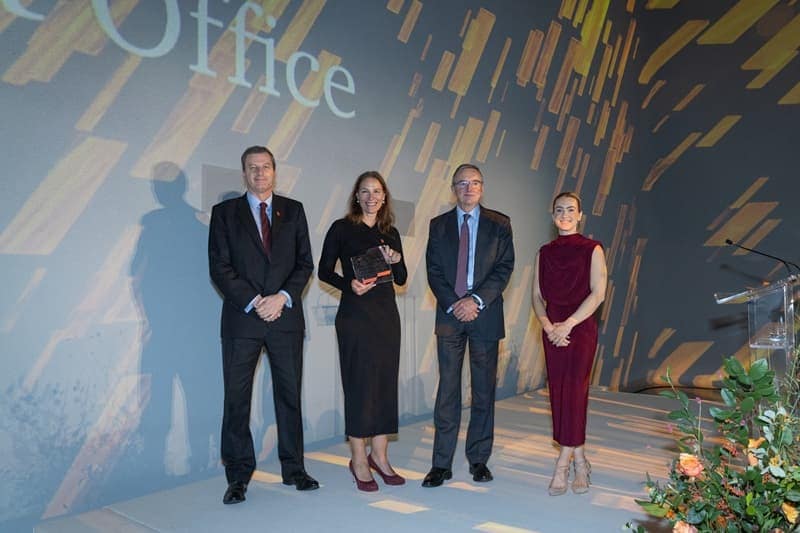
Met Office

British Business Bank

UK Atomic Energy Authority (UKAEA)


The number of public sector bodies whose reports were published within the deadline for this award increased this year, indicating an improvement in reporting timelines. The judges also noted a positive trend in terms of reporting quality and transparency after a plateau in previous years, partly reflecting more public sector organisations – including two of the shortlist – seeking feedback on last year’s assessment for this award and demonstrating a genuine commitment to continuous improvement. The judges were looking for public sector reporting that embodied accountability, transparency, accessibility and understandability, and they agreed that all the winner and highly commended bodies demonstrated strength across many of these areas. Panellists gave special praise to British Business Bank for its strong narrative about its mission and clear explanation of its KPIs, and UKAEA – last year’s winner – for once again making complex science understandable for the lay reader. But the Met Office won the nod from the judges for attributes including its “very good strategic clarity and clear linkage to public value.”

Reporting in the Public Sector (in association with the National Audit Office) award winners

“The first page of the Met Office report is very impressive, tracing through its financial impacts. And its reporting on technology and AI is excellent, showing it’s a global leader in climate science.”

Judge's comment

Sustainability Reporting in the FTSE350 

Winner Highly commended
Hilton Food Group plc Rotork plc
Vodafone plc

Now in its 17th year, this award was assessed amid a shifting regulatory landscape, with the EU having announced a pause to the Corporate Sustainability Reporting Directive (CSRD) regulations and the UK holding consultations on some new sustainability reporting requirements for introduction next year. Against this background, the three nominated companies varied widely in size and sector – differences that the judges felt influenced the respective strengths of their reporting. Panellists singled out Rotork’s TCFD and risk mitigation disclosures for special praise, along with Vodafone’s clearly presented double materiality assessment linked to its strategy. But Hilton Foods clinched the award with reporting that the judges felt had the “warmth” of a family-sized firm yet took a rigorous, data-driven approach to showing how sustainability was embedded in its business. Some panel members were particularly impressed by Hilton’s “Sustainable Protein Plan”, launched this year.

“I found a personal connection with the Hilton report: easy to read, with a clear purpose and integration linking sustainability with financial KPIs.”

Judge's comment

Social Reporting in the FTSE 350

Winner Highly commended
Hilton Food Group plc Rotork plc
Vodafone plc

Now in its 17th year, this award was assessed amid a shifting regulatory landscape, with the EU having announced a pause to the Corporate Sustainability Reporting Directive (CSRD) regulations and the UK holding consultations on some new sustainability reporting requirements for introduction next year. Against this background, the three nominated companies varied widely in size and sector – differences that the judges felt influenced the respective strengths of their reporting. Panellists singled out Rotork’s TCFD and risk mitigation disclosures for special praise, along with Vodafone’s clearly presented double materiality assessment linked to its strategy. But Hilton Foods clinched the award with reporting that the judges felt had the “warmth” of a family-sized firm yet took a rigorous, data-driven approach to showing how sustainability was embedded in its business. Some panel members were particularly impressed by Hilton’s “Sustainable Protein Plan”, launched this year.

Impact in Social Enterprise (in association with the School for Social Entrepreneurs) award winners

“I found a personal connection with the Hilton report: easy to read, with a clear purpose and integration linking sustainability with financial KPIs.”

Judge's comment

Tax reporting in the FTSE 350 – multinationals and UK-focused companies

Multinationals
Winner Highly commended
Prudential PLC Barclays Bank PLC
Shell PLC

The tax reporting environment continues to evolve. With the societal significance of companies’ tax contribution continuing to grow, tax is becoming increasingly integrated into broader sustainability reporting frameworks. Meanwhile, how companies handle the incoming requirement for country-by-country reporting is under close scrutiny. And the OCED’s ‘Pillar Two’ – introducing a global minimum tax rate – represents a seismic shift. All of this increases both the importance and difficulty of telling a clear and consistent story all the way from tax approach, principles and strategy to the resulting impacts on society. The judges felt the nominees for both awards had made a great effort at marshalling a huge amount of information to create such a story, with each exhibiting differing strengths – although excellent coverage of tax risks was a common theme, as was smart use of graphics to summarise complex data. Prudential won the multinational award, with one panellist commenting:

“Prudential’s tax reporting simplifies the complexity. Its graphic breaking down its total tax contribution over the past 10 years is really interesting, as is its clear reconciliation of its total tax charge to corporate income tax paid.”

UK-focused companies
Winner Highly commended
SSE PLC Legal & General Group PLC
Lloyds Banking Group PLC

Winning the UK-focused award for the third successive year, SSE was differentiated by its compelling discussions on tax’s role in the transition to net zero, and its consistent positioning of tax as central to its contribution to society. A judge said:

“SSE’s annual report immediately establishes the context of its tax strategy and sustainability reporting as part of its core business. And this embedding really comes to life in its tax supplement.”

Cyber Security Reporting in the FTSE 350

Winner Highly commended
Vodafone Barclays

Following a year of increasing global disruption stemming from geopolitical tensions, and with AI technology putting increasingly powerful capabilities in the hands of attackers, the cyber risks facing UK companies are continuing to escalate. Yet tightening budgets can hamper companies’ ability to protect themselves. Against this background, boards have a growing responsibility to report transparently on their cyber security threats and responses – something that precious few FTSE 350 companies are currently doing. In this complex area of reporting, the judges were seeking disclosures that were comprehensive yet understandable, setting out how companies are rising to their cyber challenges. While all the reports had specific strengths, they felt that Vodafone – also last year’s winner – was set apart by its detailed yet compelling coverage, and its integrated use of interactive media such as videos.

Cyber Security Reporting in the FTSE 350

“Vodafone’s cyber reporting is holistic, dynamic and accessible to the lay user, with great use of graphics. I particularly like the case studies that bring cyber to life, and the QR codes linking to supplementary information.”

Judge's comment

Award winners 2025

Sector awards

Impact in Social Enterprise (in association with the School for Social Entrepreneurs)

Winner Highly commended
Breadwinners Foundation

Leaders Plus

Nimbus Disability

Social Enterprises – businesses that trade for a social or environmental purpose – represent a major segment of the UK economy, consisting of 131,000 companies that collectively employ 2.3 million people and reinvested £1bn of profits in their missions last year. PwC’s support for the sector includes a longstanding collaboration with the School for Social Entrepreneurs, co-supporter of this award. As in previous years, the judges were moved emotionally by the reporting from the nominees, especially the case studies describing the positive impacts on beneficiaries’ lives. Panellists singled out Leaders Plus’s “great” mentoring programme for parents returning to work and Nimbus’s “very strong” governance disclosures, an area where they felt many social enterprises struggle. But Breadwinners – runner-up last year – clinched the award this time with improved reporting that drew on lessons learned from previous winners. Strengths highlighted by the panellists included Breadwinners’ “innovative” use of AI for language translation.

Impact in Social Enterprise (in association with the School for Social Entrepreneurs) award winners

“Breadwinner’s reporting is very inspiring, and they put in a great application. Also, the need for what they do has only increased in the past year.”

Judge's comment

Reporting in Charities

Winner Highly commended
The Royal Society

Nuffield Health

Macmillan Cancer Support

Given the challenging environment in which many charities are operating, this year’s criteria placed a greater focus on balance in charity reporting. This involved looking at how charities communicated the challenges they faced, as well as their successes.

The judges praised all three nominees for their “thoughtful, transparent, well-structure reporting of the kind that builds trust”. Panellists highlighted Macmillan Cancer Support’s focus on human impact, as a “great example of how you can report with both heart and rigour”, whilst Nuffield Health was commended for its strong use of data and case studies.

However, the judges felt that the Royal Society’s accounts were set apart through transparent reporting on governance, and a clear “golden thread” feeding through the whole report.

Reporting in Charities award winners

“The Royal Society has produced a simply wonderful report. It tells a compelling story about how it creates value for society, and it reports very clearly on both where its income comes from and where it goes.”

Judge's comment

Reporting in the Public Sector (in association with the National Audit Office)

Winner Highly commended
Met Office

British Business Bank

UK Atomic Energy Authority (UKAEA)


The number of public sector bodies whose reports were published within the deadline for this award increased this year, indicating an improvement in reporting timelines. The judges also noted a positive trend in terms of reporting quality and transparency after a plateau in previous years, partly reflecting more public sector organisations – including two of the shortlist – seeking feedback on last year’s assessment for this award and demonstrating a genuine commitment to continuous improvement. The judges were looking for public sector reporting that embodied accountability, transparency, accessibility and understandability, and they agreed that all the winner and highly commended bodies demonstrated strength across many of these areas. Panellists gave special praise to British Business Bank for its strong narrative about its mission and clear explanation of its KPIs, and UKAEA – last year’s winner – for once again making complex science understandable for the lay reader. But the Met Office won the nod from the judges for attributes including its “very good strategic clarity and clear linkage to public value.”

Reporting in the Public Sector (in association with the National Audit Office) award winners

“The first page of the Met Office report is very impressive, tracing through its financial impacts. And its reporting on technology and AI is excellent, showing it’s a global leader in climate science.”

Judge's comment

Reporting in the FTSE 350

Winner Highly commended
Mondi plc Mitie Group plc

This award recognises companies that are consistently strong across all aspects of reporting – including having a strategic “backbone” underpinned by a coherent, integrated narrative; defining and disclosing what is “material” to the business; and explaining how it balances the interests of different stakeholders. With changes including the new Corporate Governance Code set to take effect from next year, the judges felt both nominees had produced excellent reporting that anticipated several upcoming regulatory requirements. Mitie was praised for its easily readable annual report with purpose and strategy woven in throughout, supported by strong risk and stakeholder disclosures, and brought to life by engaging case studies. But Mondi took first place with visually-attractive, well-signposted reporting that clearly linked sustainability and financial performance, with one judge singling out its informative description of double materiality. Another commented: “Being new to Mondi, I learned a huge amount about its business model and strategic progress.”

Reporting in the FTSE 350 award winner

“Mondi’s annual report is an enjoyable read. It’s very clear on strategy, KPIs and stakeholders, with a well-integrated narrative linking them all.”

Judge's comment

Thematic awards

Sustainability Reporting in the FTSE 350 

Winner Highly commended
Hilton Food Group plc Rotork plc
Vodafone plc

Now in its 17th year, this award was assessed amid a shifting regulatory landscape, with the EU having announced a pause to the Corporate Sustainability Reporting Directive (CSRD) regulations and the UK holding consultations on some new sustainability reporting requirements for introduction next year. Against this background, the three nominated companies varied widely in size and sector – differences that the judges felt influenced the respective strengths of their reporting. Panellists singled out Rotork’s TCFD and risk mitigation disclosures for special praise, along with Vodafone’s clearly presented double materiality assessment linked to its strategy. But Hilton Foods clinched the award with reporting that the judges felt had the “warmth” of a family-sized firm yet took a rigorous, data-driven approach to showing how sustainability was embedded in its business. Some panel members were particularly impressed by Hilton’s “Sustainable Protein Plan”, launched this year.

“I found a personal connection with the Hilton report: easy to read, with a clear purpose and integration linking sustainability with financial KPIs.”

Judge's comment

Social Reporting in the FTSE 100

Winner Highly commended
Mondi plc

HSBC UK Bank plc

Lloyds Banking Group plc

As expectations grow around how companies treat their employees, customers, suppliers and wider communities, the social dimension of ESG is becoming ever more embedded in corporate strategies. This has placed greater emphasis on social reporting, with companies facing the challenge of condensing all of their people-related interactions and impacts into a single, coherent narrative. Whilst this is an area of reporting that’s still evolving it is likely we will see increasing standardisation in the coming years – for example, with some larger companies already reporting under CSRD and more to follow in the future, and the UK imminently expected to mandate reporting of ethnicity and disability pay gaps. The panellists felt the nominees had all produced excellent social disclosures, citing examples such as HSBC’s voluntary disability pay gap reporting and Lloyds’ compelling use of case studies. But Mondi won the vote, with the judges praising its clear categorisation of material issues by segment of the value chain, and its candid reporting on progress against social targets.

“Mondi has clearly put real effort into its social reporting, and it feels very credible … You get a sense that this is a business that want to grow sustainably.”

Judge's comment

Tax Reporting in the FTSE 350 – UK-Focused Companies

Winner Highly commended
SSE plc

Legal & General plc

NatWest Group plc

Winning the UK-focused tax reporting award for the fourth successive year, SSE’s was set apart for the panellists by qualities including its very clear signposting, comprehensive glossary, and detailed explanation of its rising total tax contribution in UK. “All in all, this is great tax reporting that continues to win hearts and minds,” commented a judge.

“SSE still seems to be setting the standard and leading the market in tax transparency. Its reporting on tax is strongly linked to sustainability, and its ethical approach is clear throughout.”

Tax Reporting in the FTSE 350 – Multinationals

Winner Highly commended
Anglo American plc

Barclays plc

bp plc

Some new international tax reporting regimes began to take effect in 2024 – most notably the OECD’s Pillar Two framework – alongside the increasing inclusion of tax within sustainability reporting. In parallel, companies are also preparing for the upcoming requirements on public country-by-country reporting. Businesses are responding in various ways, seeking to meet these evolving expectations while still telling a clear and consistent story that links their tax approach, principles and strategy to the resulting impacts on society. The judges felt the nominees for both the multinational and UK-focused awards had made significant progress in improving the accessibility of their tax reporting, highlighting attributes such as plain non-technical language, clear tabular breakdowns of their total tax contribution, and innovative use of graphics to explain complex information. A case in point was Anglo American’s easy-to-read flowchart outlining the internal evaluation process for applying for tax incentives and concessions. This helped it win the multinational award, with one panellist commenting:

“Anglo American has raised its game and produced really clear and impressive tax reporting – aligning purpose, sustainability and tax while linking everything to the business model.”

Remuneration reporting in the FTSE 350

Winner Highly commended
Lloyds Banking Group plc

Severn Trent plc

Barclays plc

Remuneration reporting remains one of the most heavily scrutinised areas of corporate disclosures, with a particular focus on explaining the fairness of executive pay when set against the decisions and practices for the wider workforce. This, together with the changes some companies have put forward in relation to executive director remuneration in the context of the broader debate on UK competitiveness, has meant that many companies are putting forward more detailed disclosures that seek to explain the rationale, including the strategic and wider stakeholder alignment, for decisions taken. The judges felt that all three shortlisted companies had succeeded in achieving both goals but added that each report had its own distinct strengths – noting Barclays’ comprehensive, detailed and data-rich disclosures, Severn Trent’s clear strategic linkage and strong coverage of stakeholders, and Lloyds’ concise narrative supported by accessible graphics. The award went to Lloyds’ remuneration report, with several panellists stressing how easy it was to read and navigate given the complexity of its business, and one summing up: “For me, less is more.”

“It feels like the Lloyds report has a single editorial voice throughout … And it benefits from being half the length of some other remuneration reports.”

Judge's comment

Equities Analyst, Jupiter Asset Management

Senior Portfolio Manager of Global Equities, RBC Global Asset Management

Executive Director of Community Impact, Business in the Community

< Back

< Back
[+] Read More

The judging panel

The Building Trust Awards are judged by an expert panel, chaired by Monica Chadha. Read more about the judges below.

Building Trust Awards Chair, Non-Executive Director, Advisor, Coach

Chair of UK Shareholders Association (UKSA), CRUF UK participant and previously at Invesco

Business owner, NED, UKSA Board member and CRUF UK participant

Chief Executive, Social Mobility Foundation

Chair of CRUF UK, Member of CMAC, Member of EFRAG

Chief Executive of FutureDotNow

Crown Representative for the Voluntary and Social Enterprise Sector

Chief Policy and Communications Officer

Head of Stewardship, Evenlode

Executive Director, National Audit Office

NED at OFGEM, Invesco Asia Trust, The Golden Charter Trust and board member of University College Cork

NED and former Deputy Governor of the Bank of England

Deputy Director of Finance, HM Treasury

< Back

< Back
[+] Read More

Contact us

Alan McGill

Alan McGill

Partner, PwC United Kingdom

Tel: +44 (0)7711 915663

Follow us