



A progress update of this case study is now available, but we recommend reading this original version (from 2022) first for important background and context.
Read the progress update Read the full report
Drone deliveries are often the first thing that come to mind when asked to consider a “futuristic” drone use case. However, due to some of the complexities noted in the Last Mile Delivery case study, it can sometimes be difficult to imagine a sky filled with drones delivering food and parcels directly to homes in built-up, congested areas such as London.
In contrast, using drones to deliver packages from, say, a warehouse or airport to a staging point prior to the consumer (Middle Mile Delivery) is less of a leap. These cargo drone deliveries are less complex than deliveries to consumers and have the potential to use existing infrastructure and integrate with existing air traffic. The cargo drones currently used for Middle Mile Delivery typically resemble something more like a small traditional fixed wing aircraft and can carry considerably larger payloads than the small drones associated with consumer delivery. By sending more packages via the air, congestion and emissions can be reduced on the roads below and remote communities can be more easily reached.
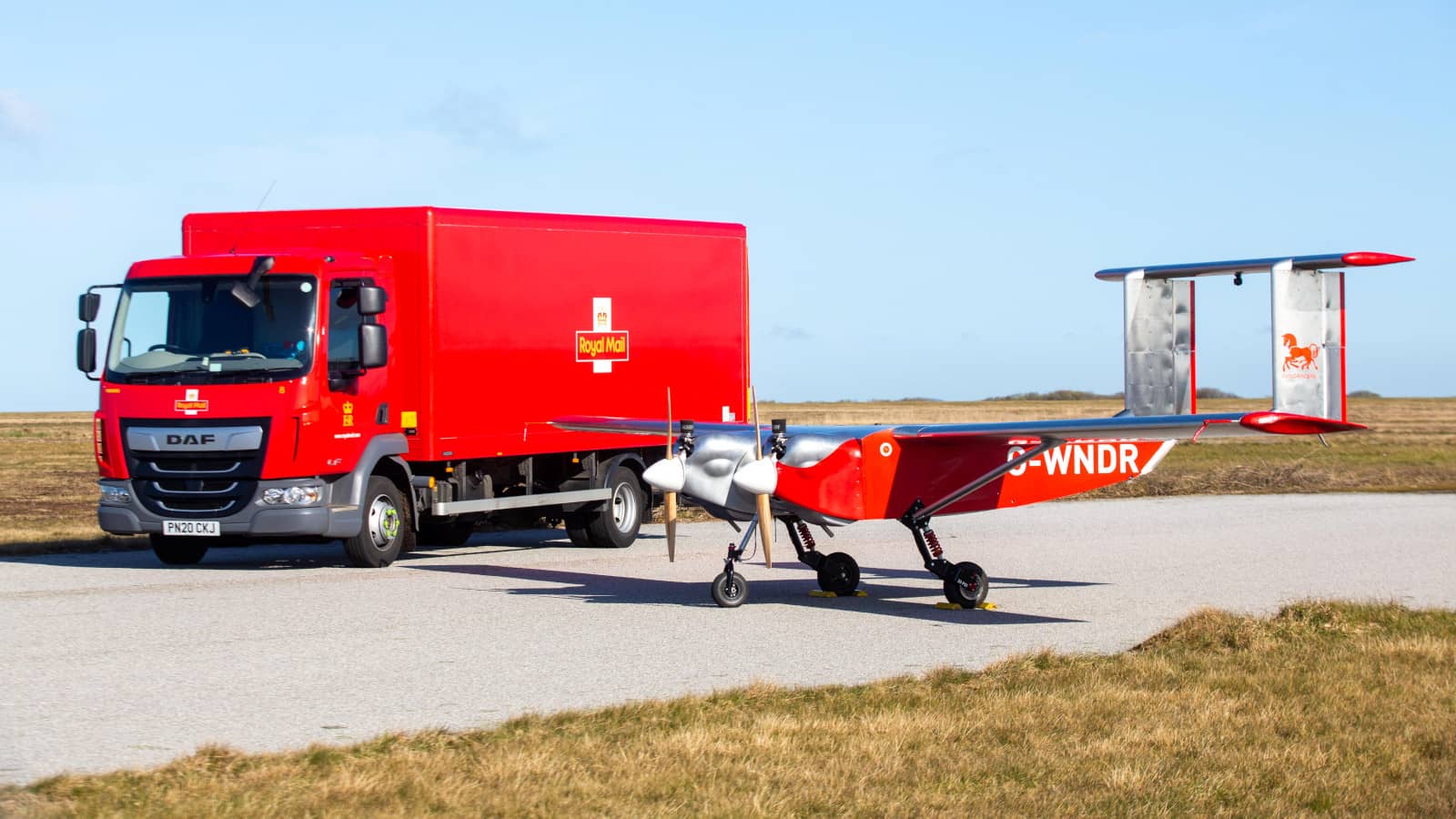
One company delivering in this area is Windracers. They currently have trials operating across the UK between the mainland and nearby islands. Their drone can make use of existing airport and aerodrome infrastructure, utilising runways to take-off and land, making it easier to quickly implement new operations. During the COVID-19 pandemic, Windracers used its drone to deliver medical supplies to locations with remote communities in a quick and efficient way. Windracers’ solutions are also better for the environment than manned aviation, with the company claiming a 30%+ reduction in carbon emissions from their initial trials. The drone has a payload capacity of 100kg, a range of up to 1000km and can fly in weather conditions that would ground manned aviation.
“This year, the Windracers team have proven our 100kg payload ULTRA system platform performance, with scheduled services in some of the toughest operating environments the UK can present to us. In connecting the communities where we have flown services, in the Orkneys, Fair Isle and Isles of Scilly, we have shown what a step change in services we can deliver, in the health care and logistics sectors. We are seeing large environmental benefits too, with significant CO2 emission reductions when compared to existing transport methods. These environmental benefits will only improve as we move to electrical and hydrogen propulsion systems. We look forward to the next 18 months where we will roll out services at network scale.”
Windracers
Operations like these could make a big difference for island communities that would have often found themselves cut off for large proportions of the year, significantly improving their healthcare and logistics.
It is expected that over the next decade the capacity of Middle Mile Delivery drones will increase, which will continue to drive their adoption. In our Future Flight Challenge Report model of cargo drones, we noted that drones with a capacity of 350kg could replace existing airfreight and deliver a 34% saving, as well as increasing quality and flexibility on the modelled route. Future applications will feature multiple simultaneous flights controlled from a central operations hub with high levels of autonomy enabling one controller to oversee tens of deliveries. We also expect that, with new battery technology, VTOL cargo drones will appear, further increasing the flexibility of a solution that already looks compelling with fixed wing drones and runways.

This case study is an extract from the report
Skies Without Limits v2.0